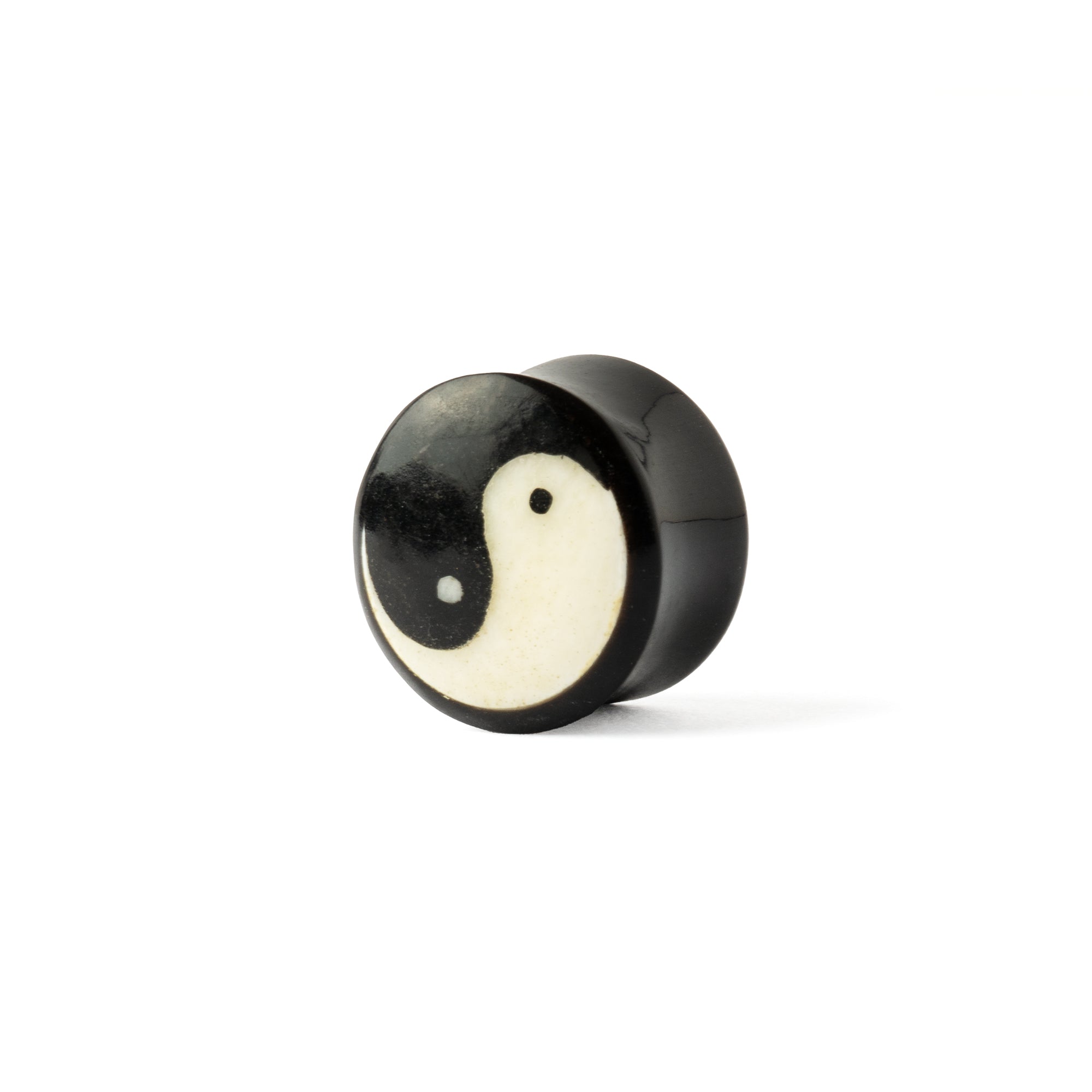
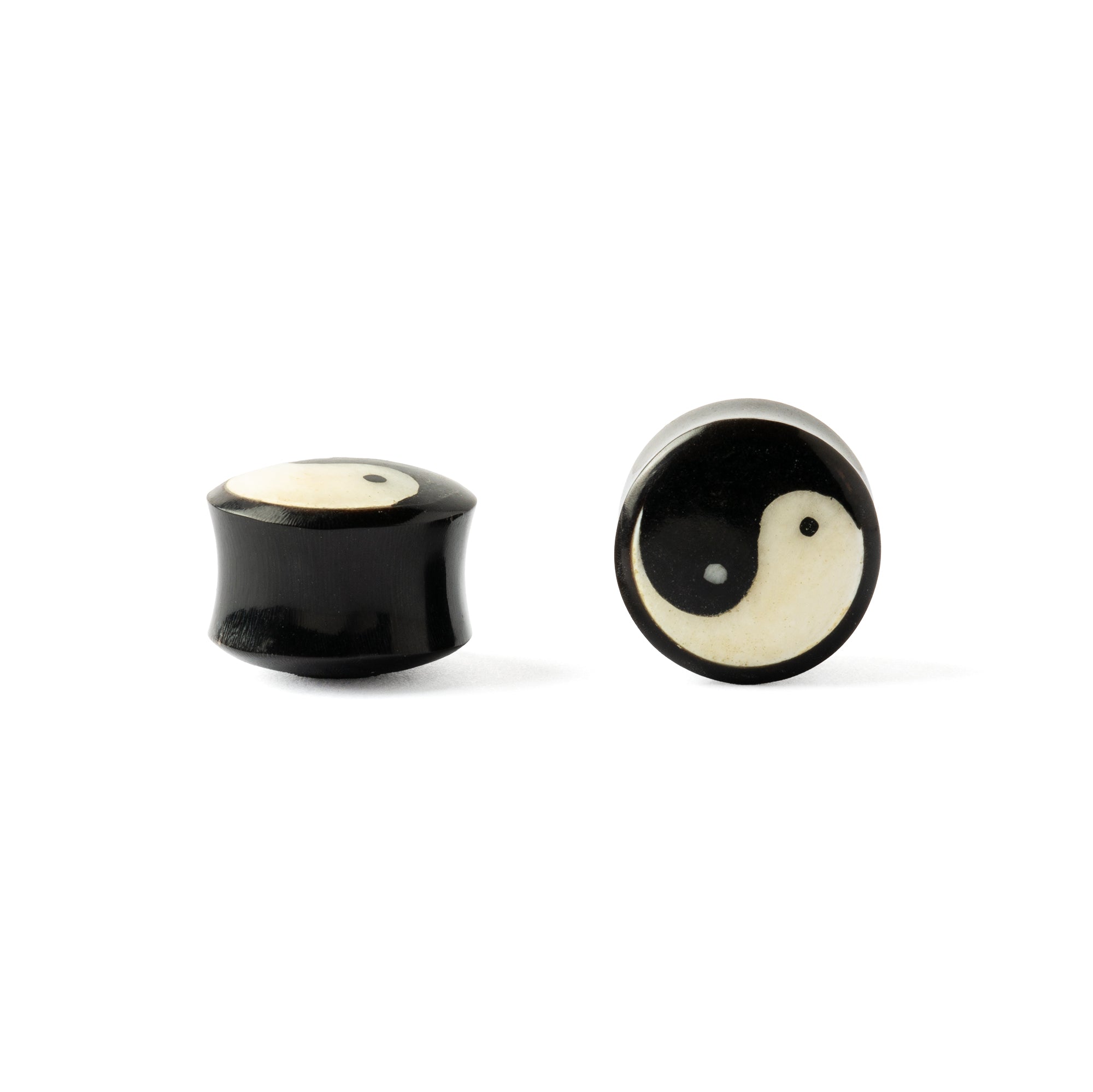
Plugs, tunnels and how they hold
A plug is solid. A tunnel is hollow, so the lobe shows through it. Everything else comes down to how the piece stays in.
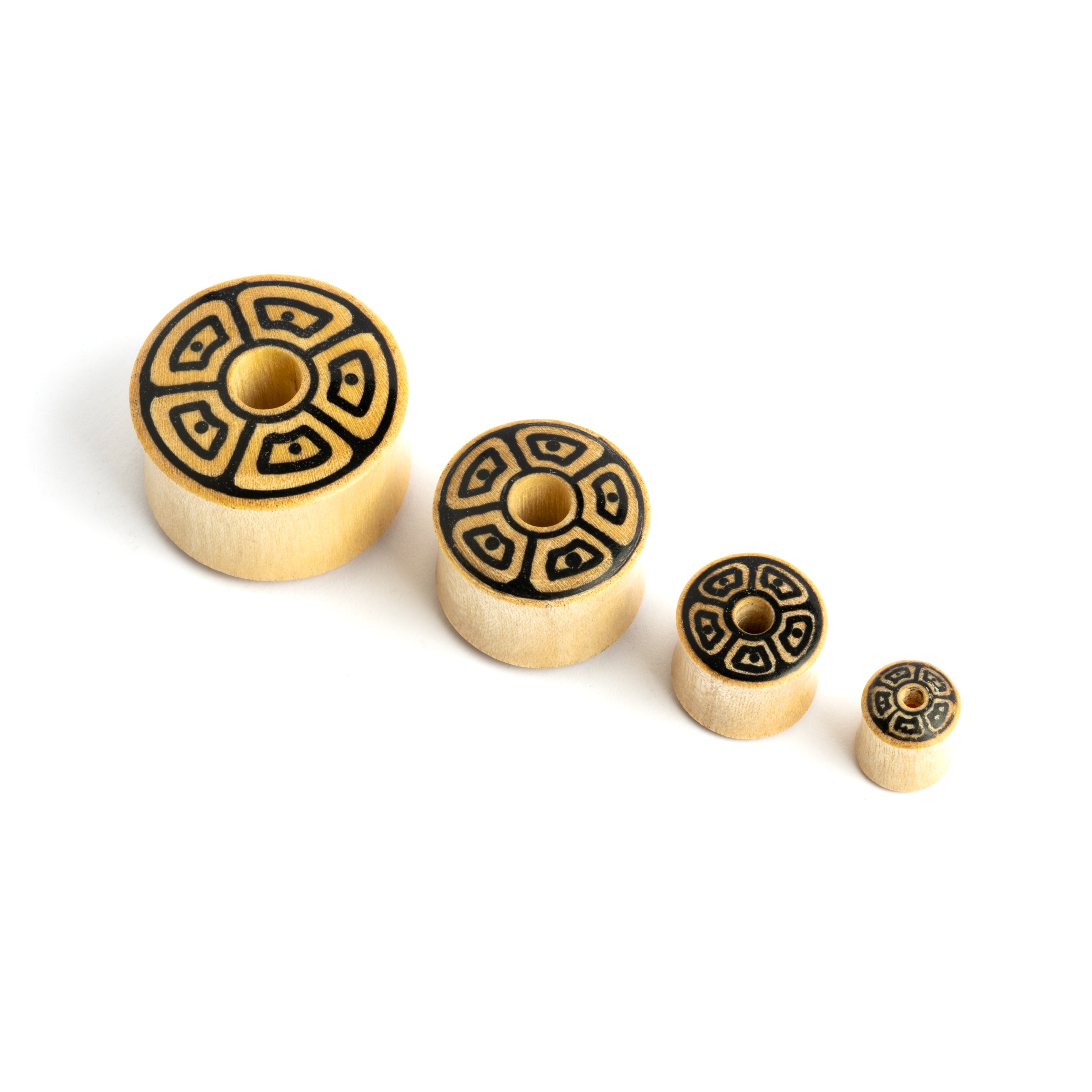
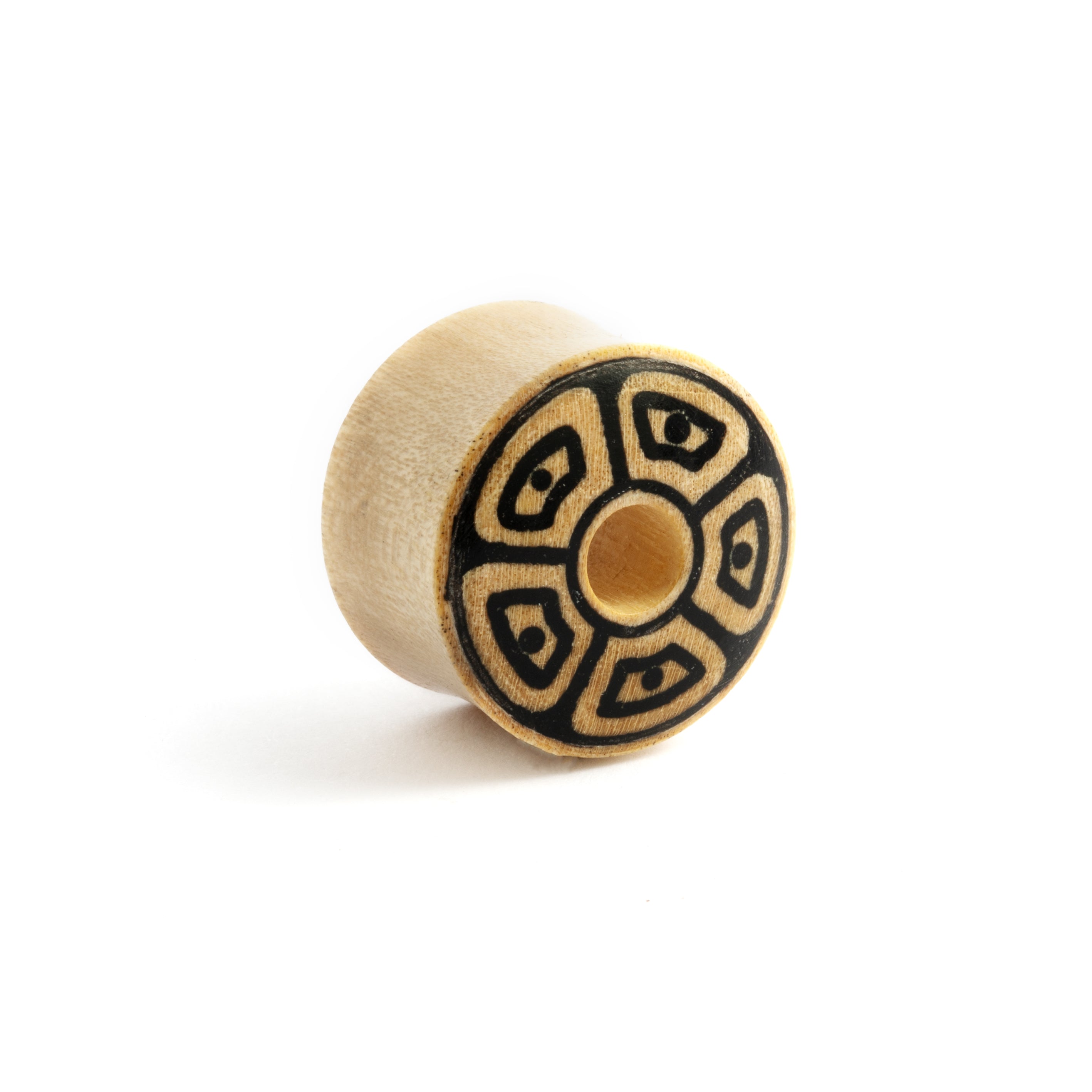
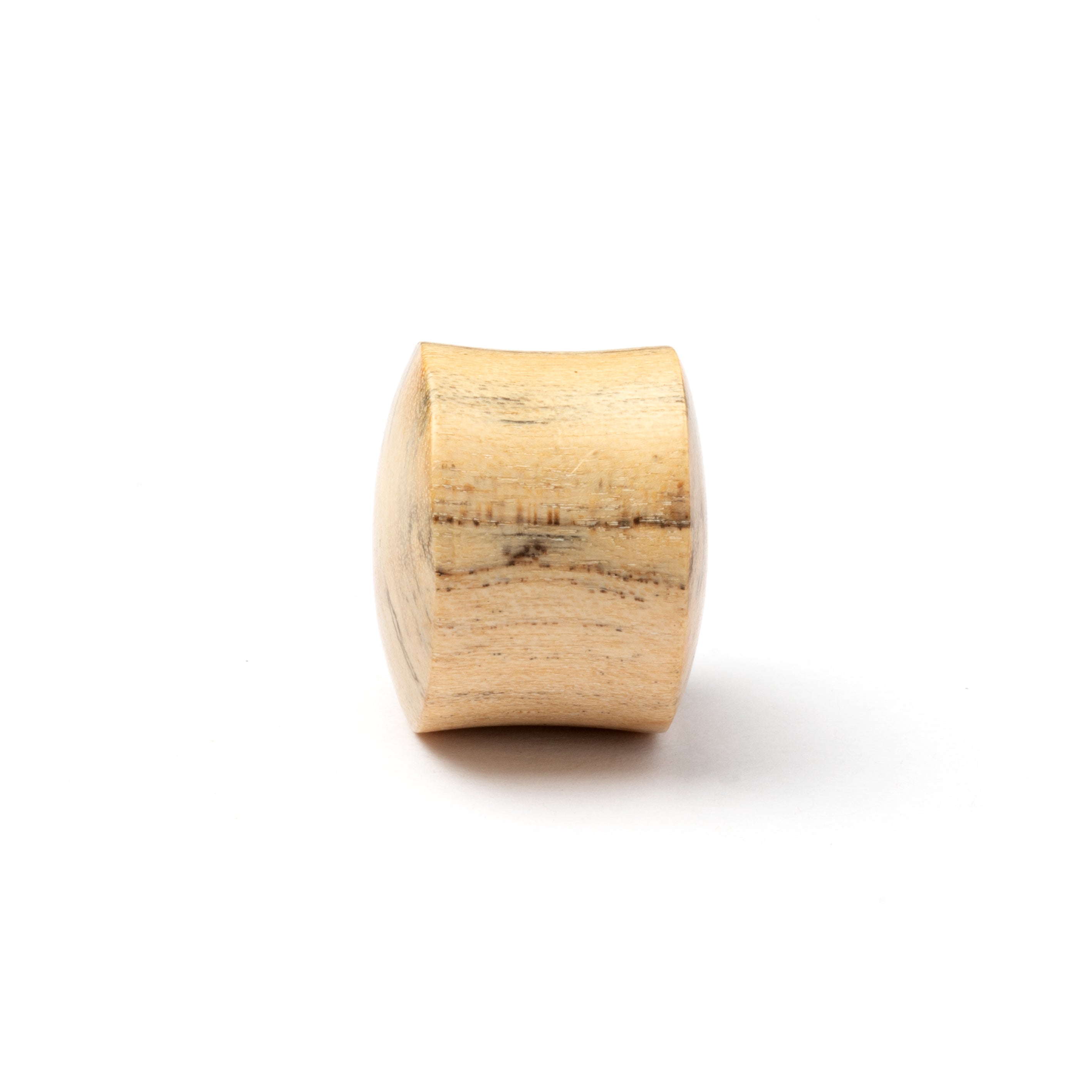
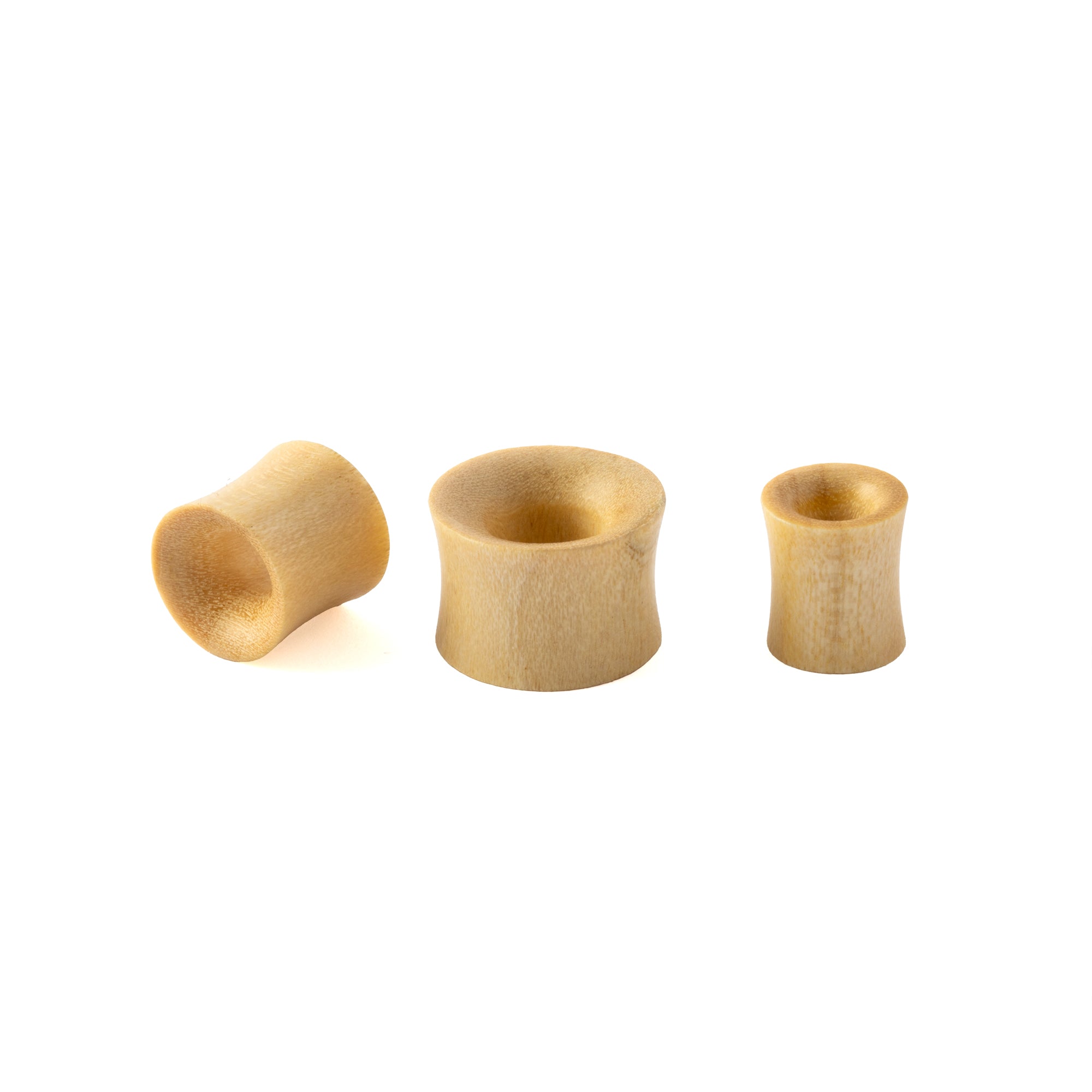
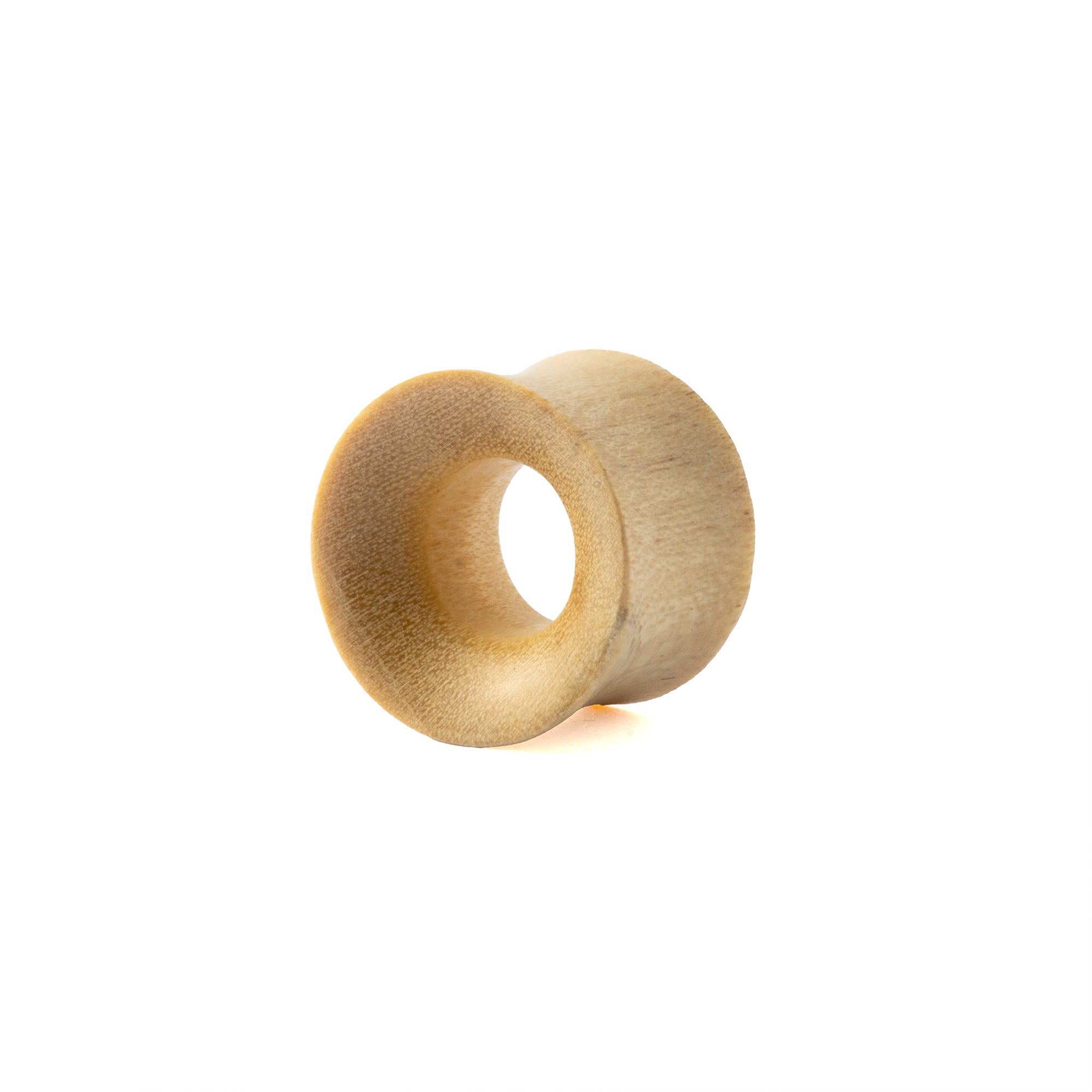
Double flare. Wider at both ends than in the middle, so the lobe sits in the waist and the piece cannot fall out. It also means the ends are larger than your stretch, so it goes in and comes out with a little work. The most common fitting in this collection.
Single flare. One flared end, one flat end, usually held by a rubber O-ring behind the lobe. Easier to get in than a double flare, and the sensible pick at a size you've only just reached.
No flare. Straight sides, held by an O-ring at each end. The gentlest to fit, and the one to choose if a stretch is still settling.
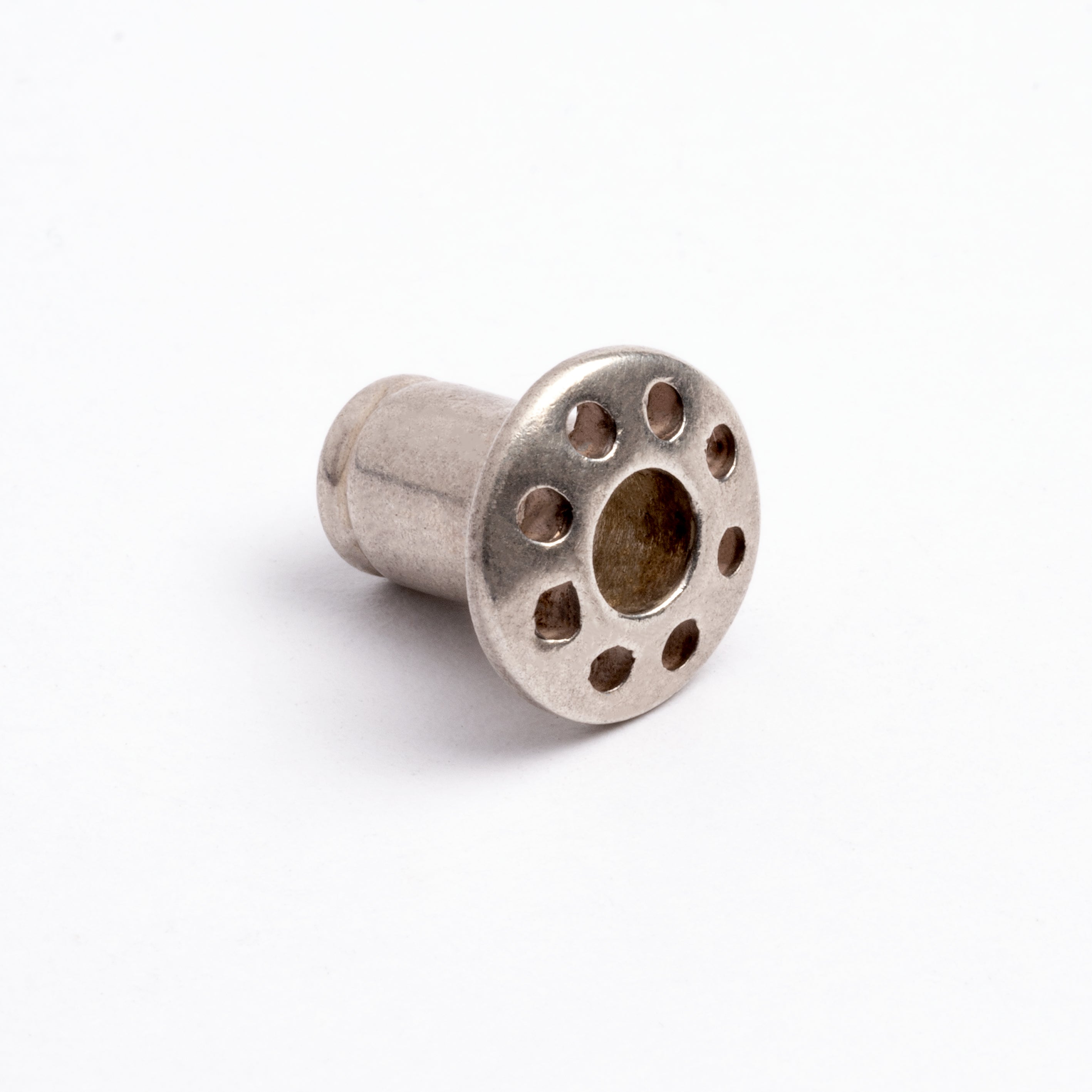
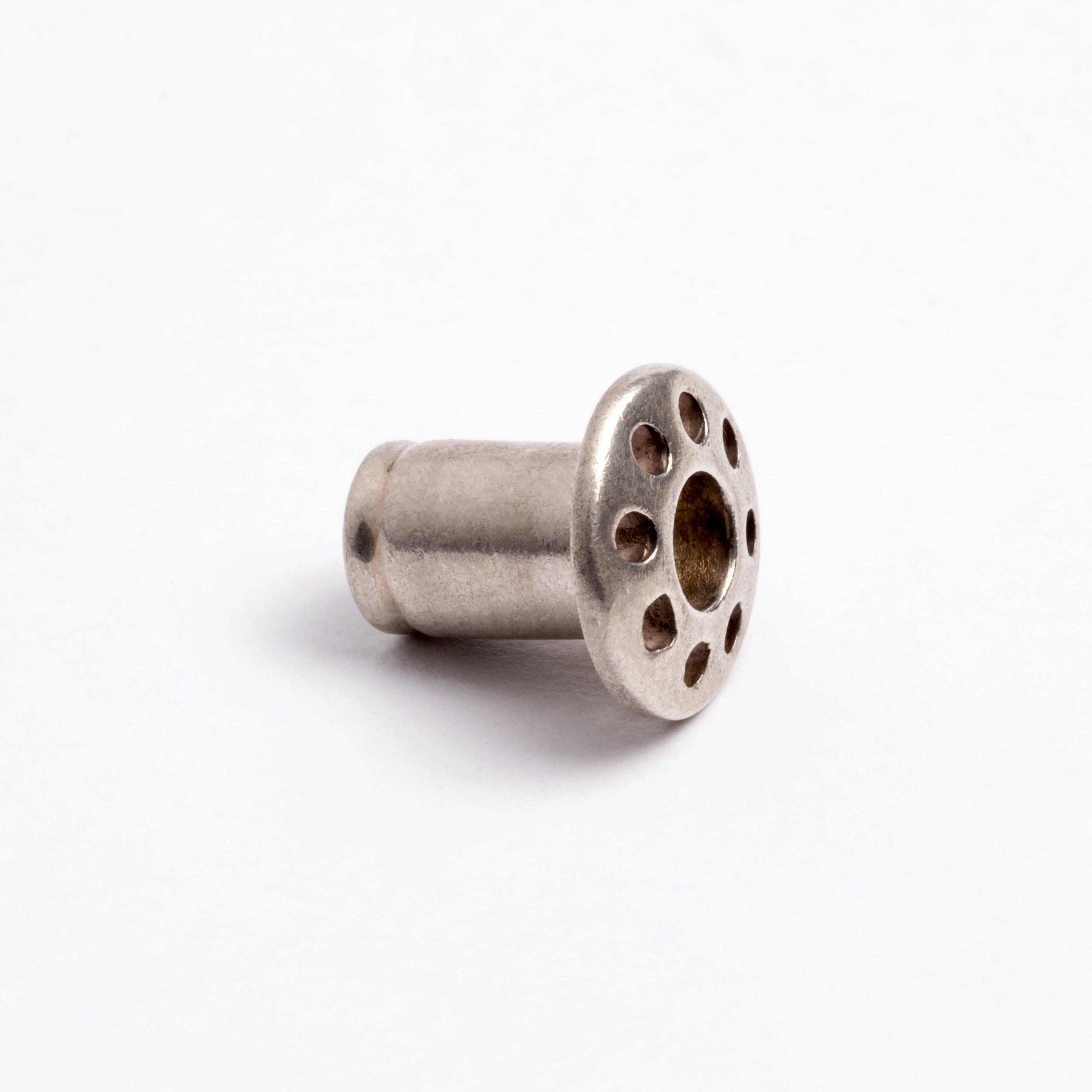
Screw-fit. The front unscrews from the body, so you thread the barrel through and screw the face back on. Secure, quick, and the easiest of all to change.
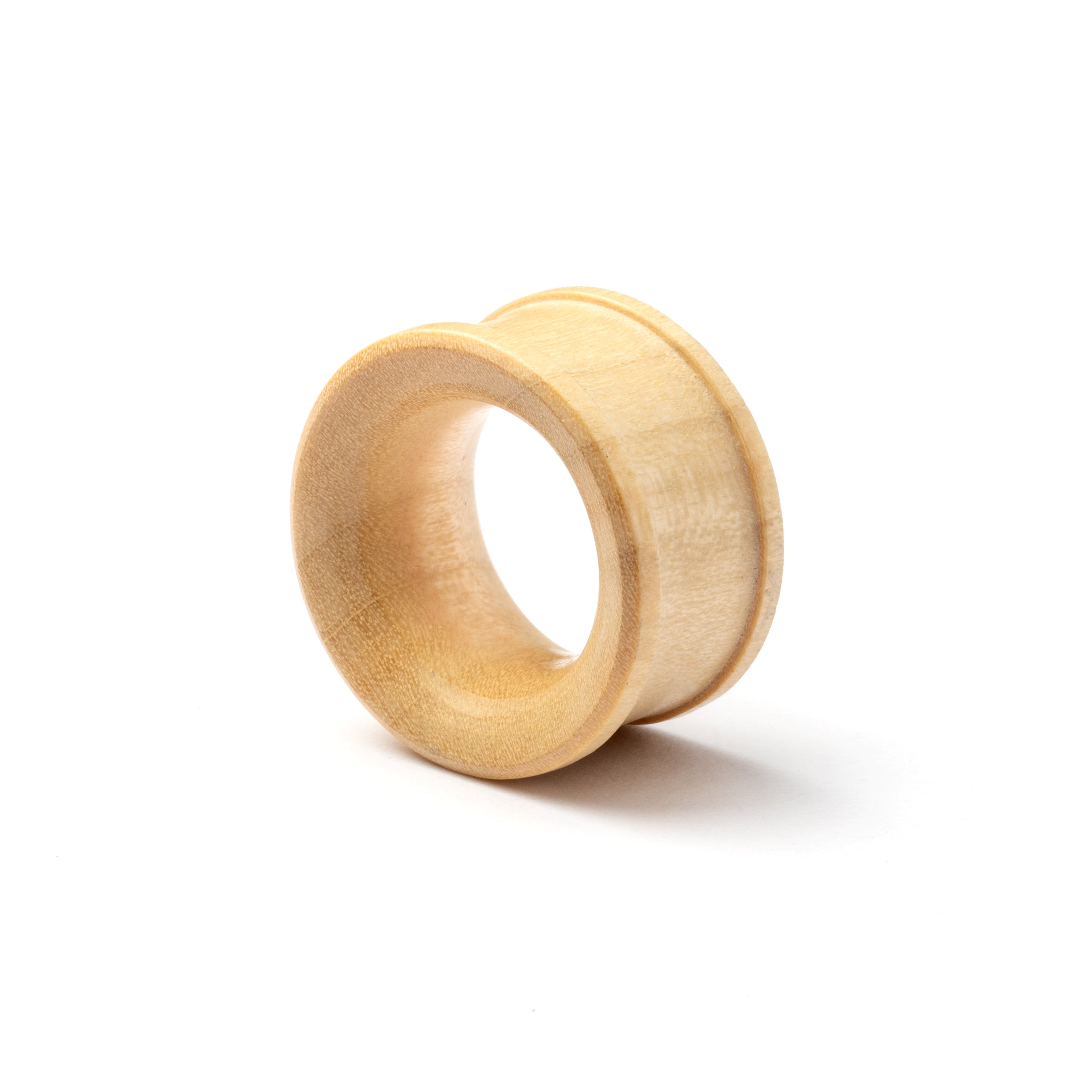
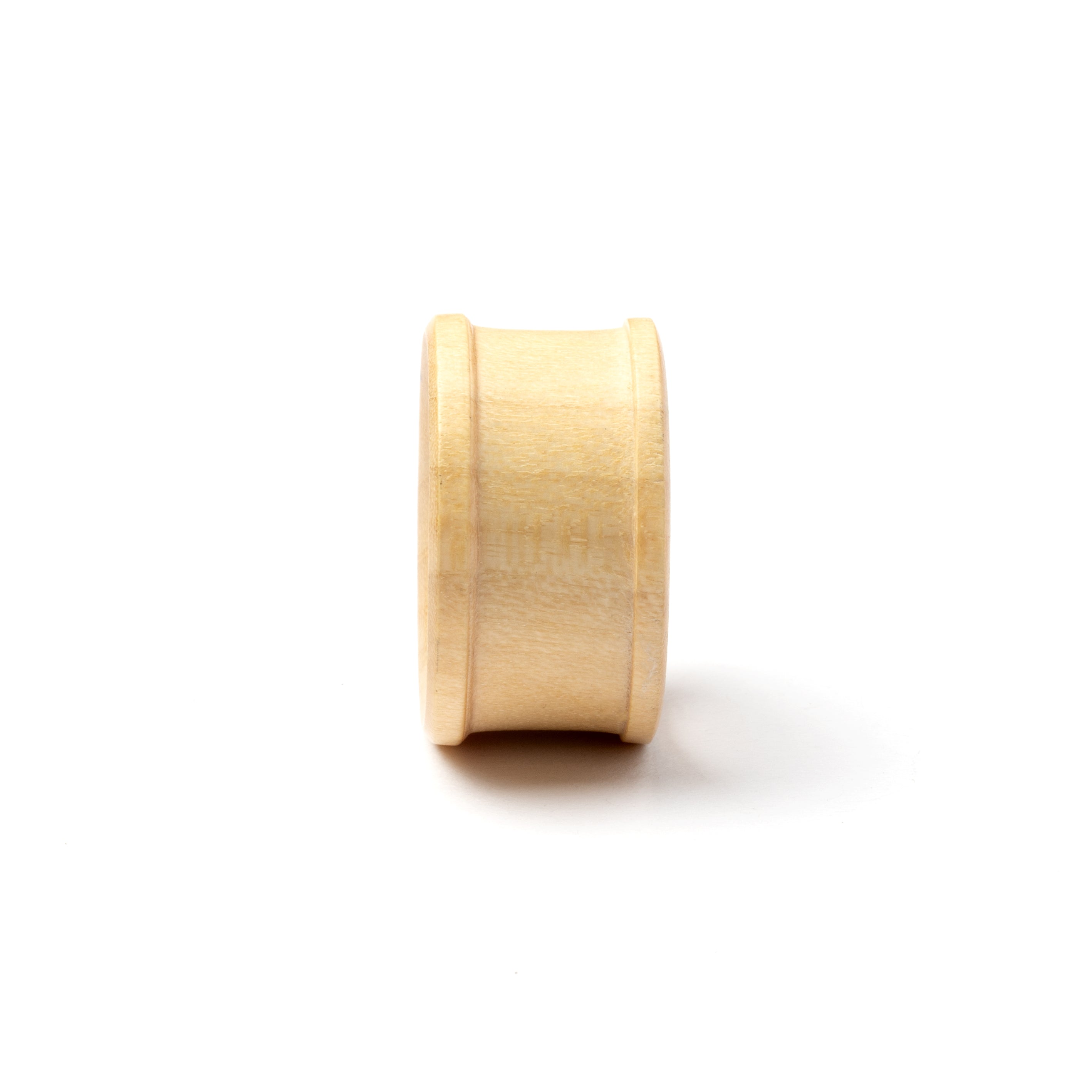
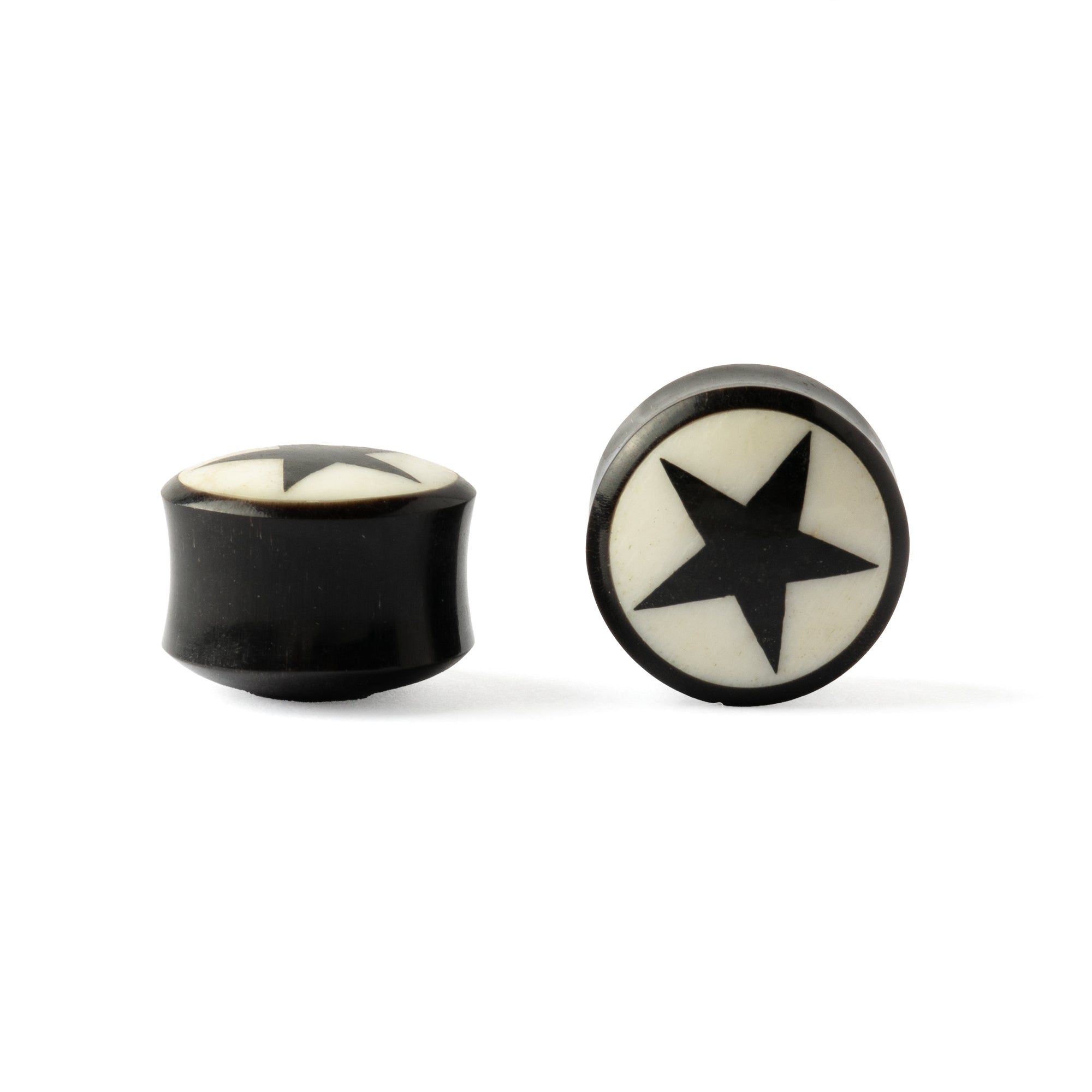
Saddles. A deep groove around the middle and no separate fixing. They stay put by shape alone, which makes them the most comfortable to sleep in once your lobe is well settled.
Getting the size right
Millimetres are what matter. Gauge numbers stop being useful above 00g, which is why every listing here leads on the millimetre measurement. The ladder most people climb: 2mm (12g), 3mm (8g), 4mm (6g), 5mm (4g), 6mm (2g), 8mm (0g), 10mm (00g), then straight millimetres from 12mm up to 38mm.
Go up one size at a time and never force it. If a piece won't seat comfortably, it's the wrong size, not a size you need to push through. A professional piercer can measure you and tell you whether your lobe is ready. Our guide to ear stretching covers the whole process, and the gauge-to-millimetre conversion chart converts in both directions.
Single or pair. Most designs here can be bought either way. Check the Quantity option before you order, because carved and stone pieces are frequently sold singly, since no two are identical.
The materials
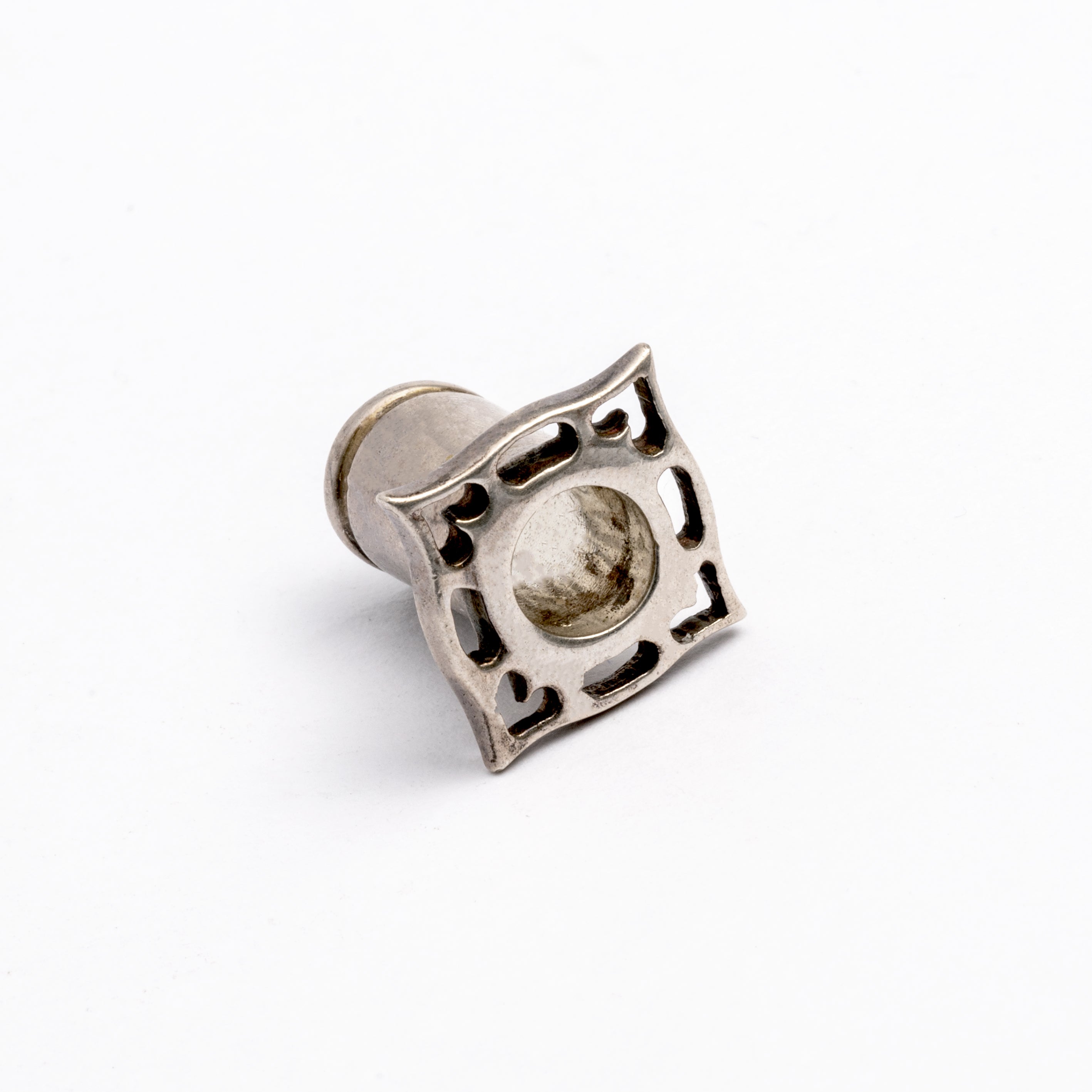
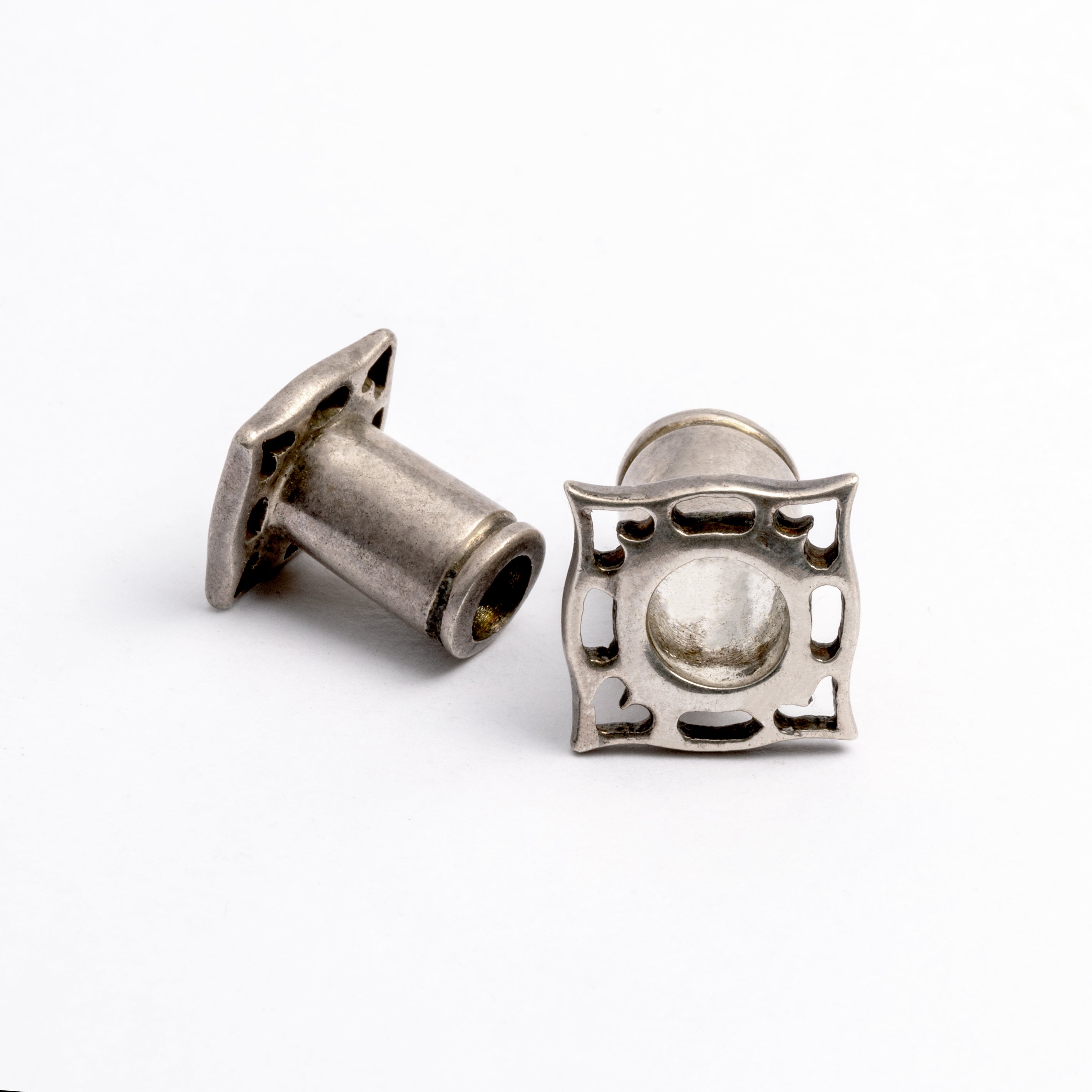
Silver, brass and white brass. Weighty, detailed, and the metals behind most of our tribal-inspired designs. Silver darkens slowly with wear.
316L surgical steel, in plain, gold, rose gold, bronze and black finishes. Hard-wearing and the easiest thing here to keep clean.
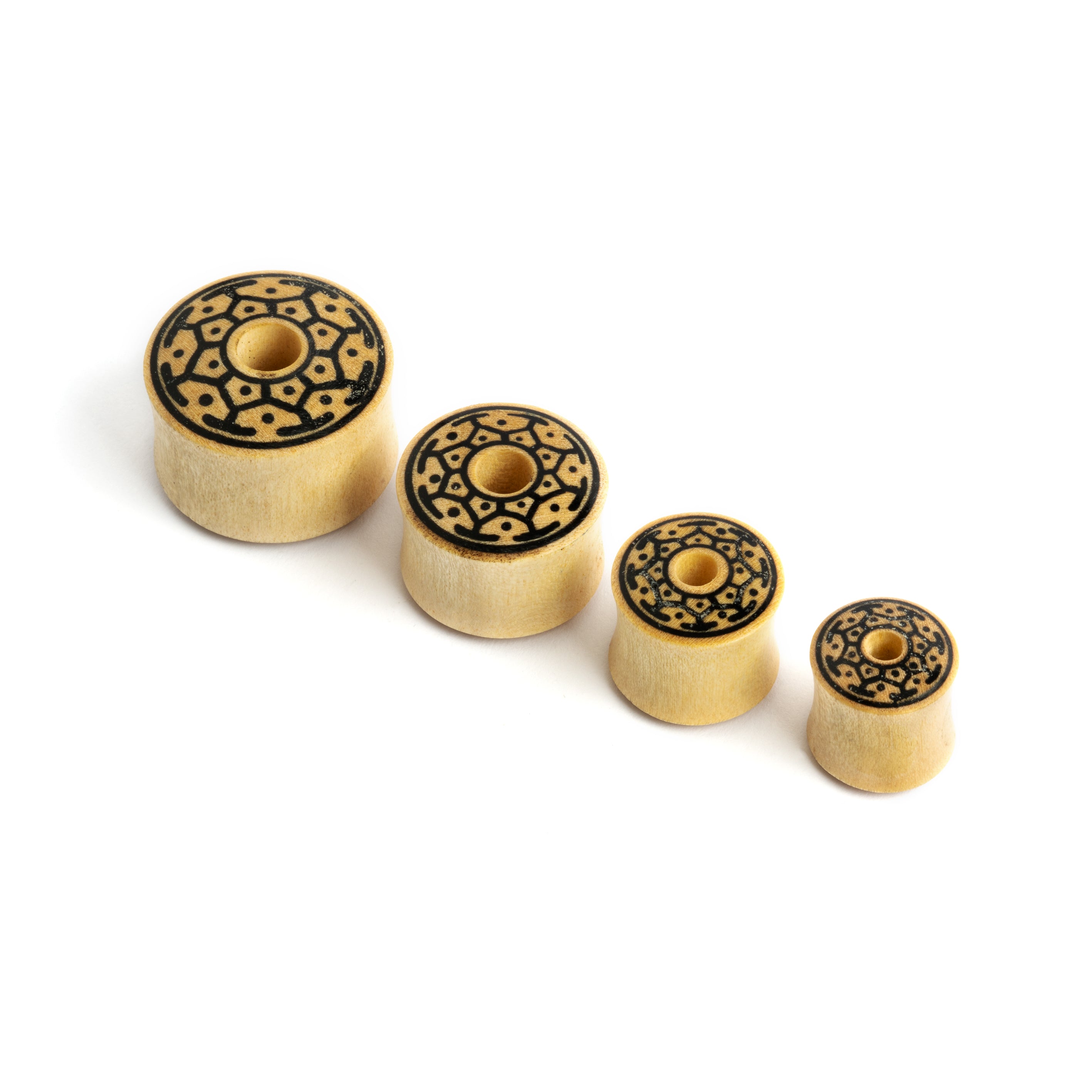
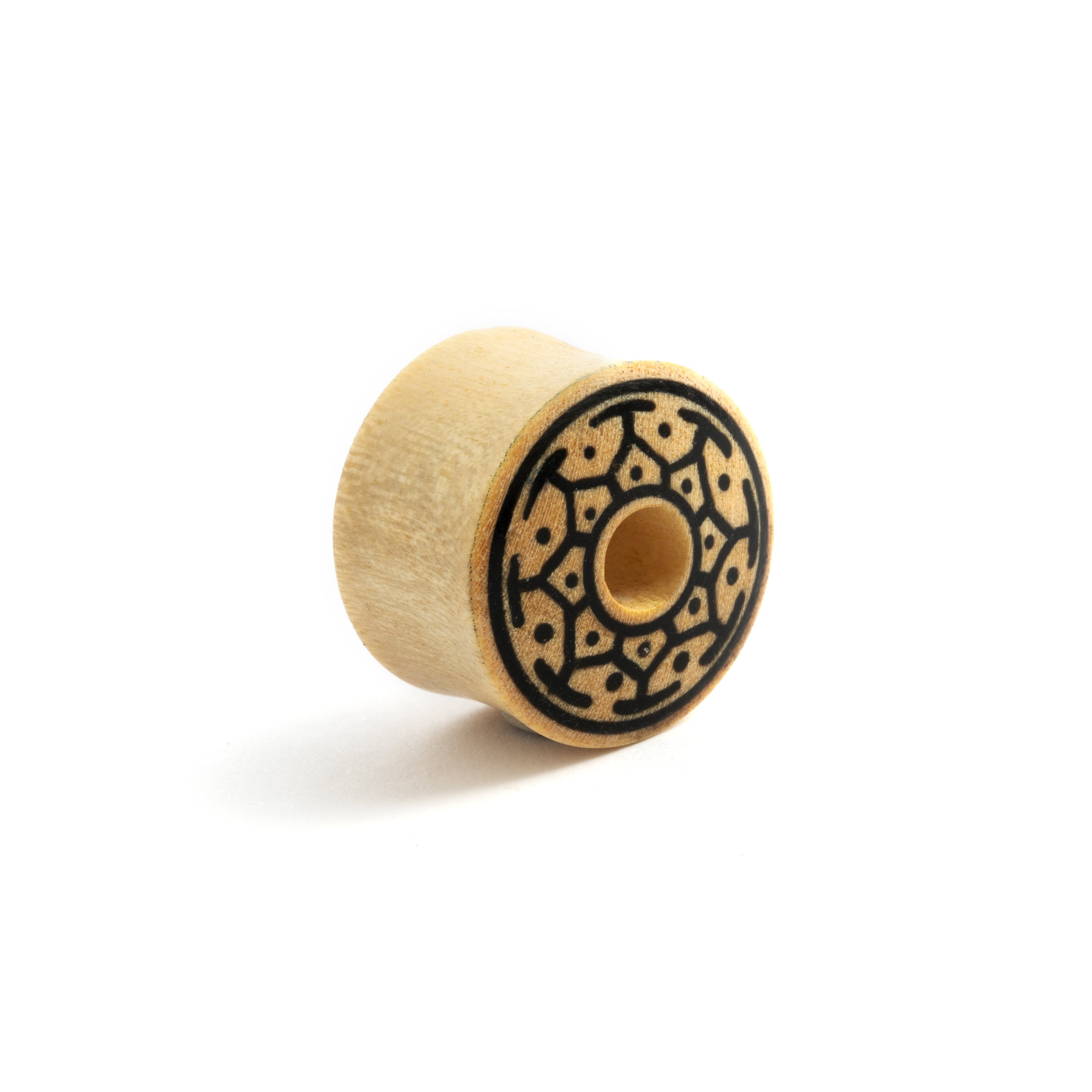
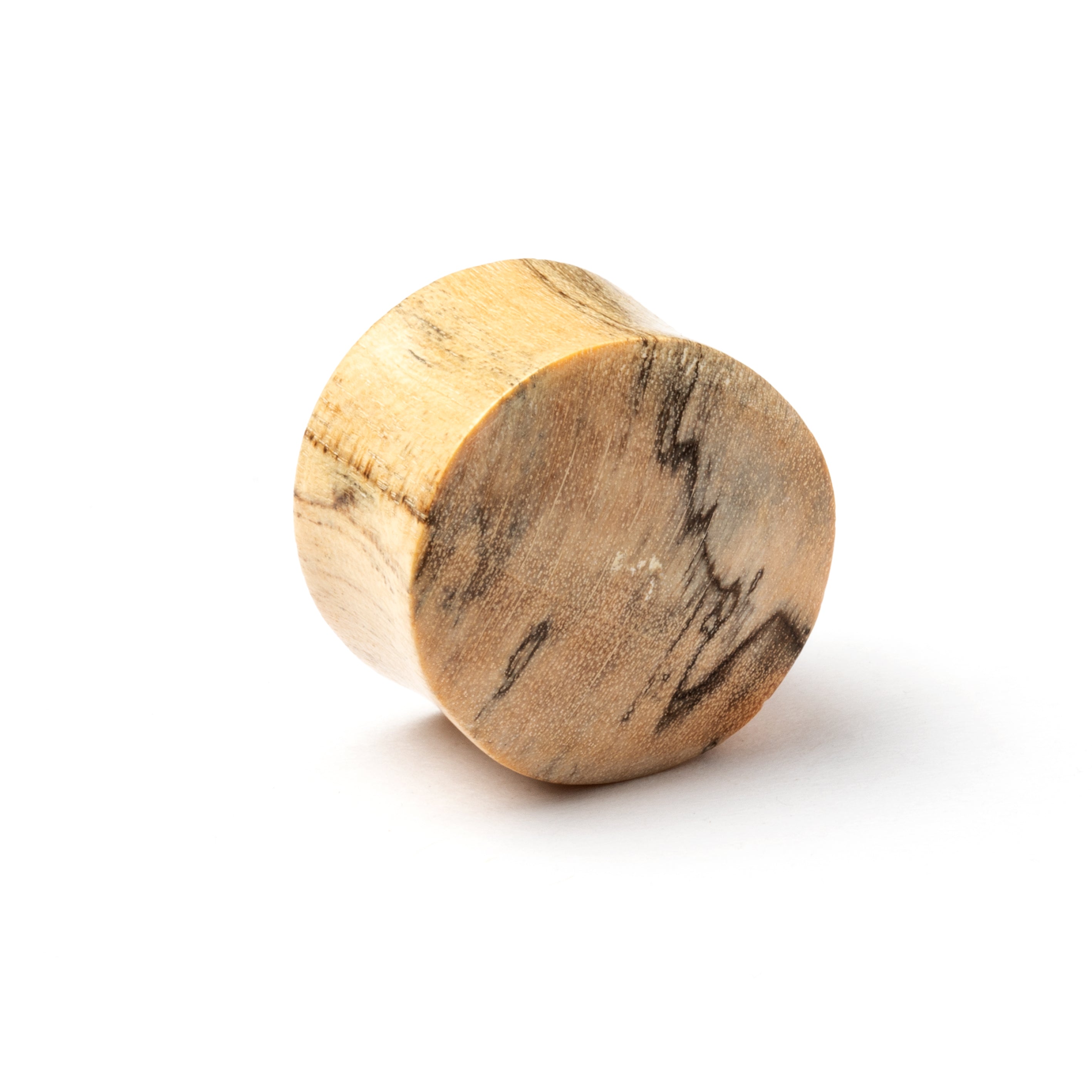
Wood. Blackwood, palmwood and crocodile wood. Light enough to forget you're wearing it, and the usual recommendation for large sizes where metal gets heavy. Wood is porous, so keep it out of water and give it an occasional wipe of oil.
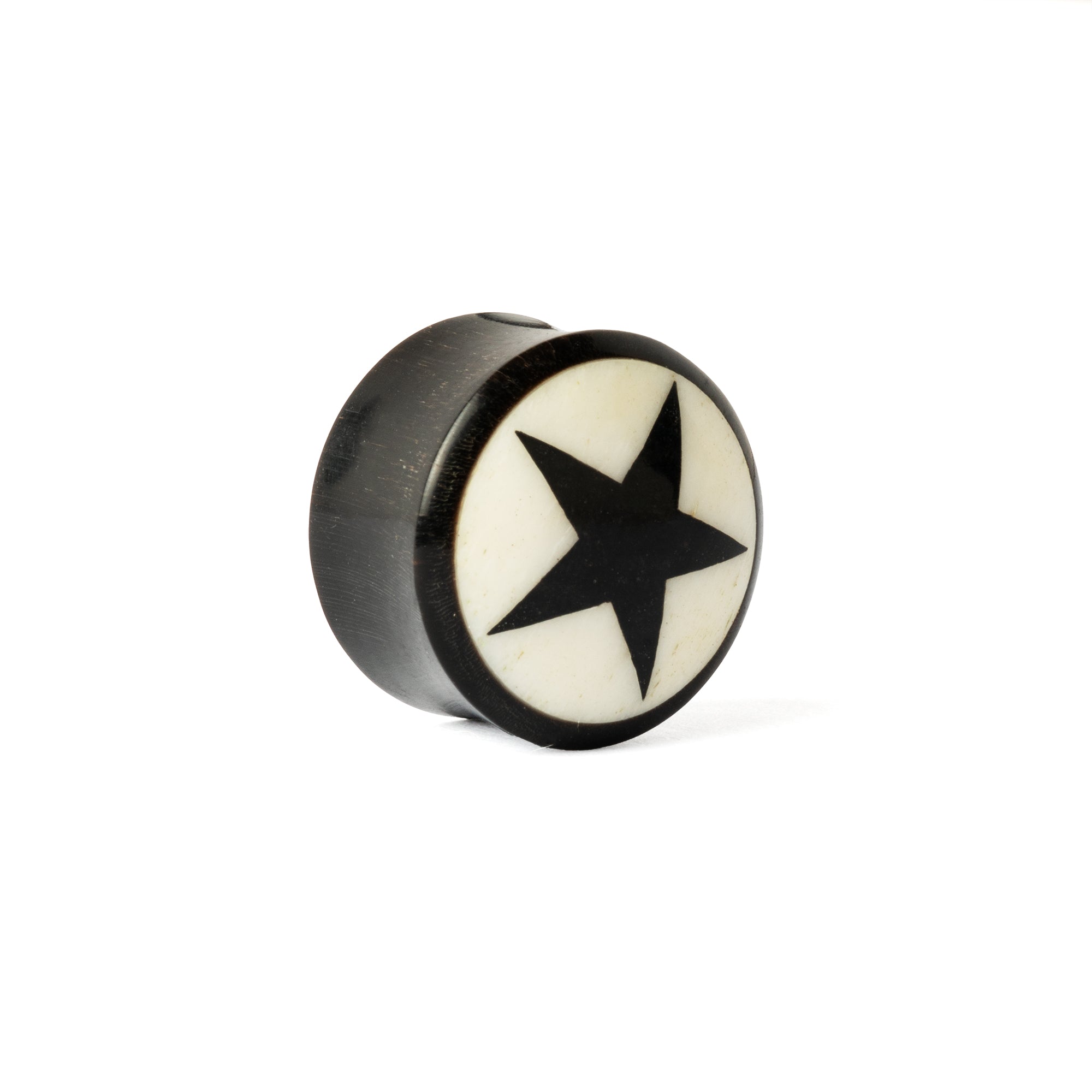
Horn and bone. Natural, warm against the skin and light in the ear. Like wood, they don't want soaking.
Stone and shell. Turquoise, quartz, obsidian, agate, jasper, onyx and jade, along with mother of pearl and abalone. Cut individually, so colour and marking vary from piece to piece. That's the material, not a fault in it.
Twenty-one designs in this collection are hand-carved. If you're stretched large and want something with real presence, the ear weights and hangers sit alongside these.
Common questions
What's the difference between a plug and a tunnel?
A plug is solid and closes the hole visually. A tunnel is hollow, so you see through the lobe. Both come in the same sizes and fittings. It's purely a question of the look you want.
What size plugs should I buy?
Buy the millimetre size you currently wear, measured rather than guessed. If you're between sizes or unsure, a piercer can measure you in seconds. Our most-stocked sizes are 8mm, 10mm, 12mm, 14mm and 16mm.
Should I choose single flare or double flare?
Double flare holds most securely but needs a settled stretch to fit comfortably. Single flare and no-flare styles, held with O-rings, are easier to get in and the better choice at a size you've only recently reached.
Are these sold as a pair?
It depends on the piece. Most listings offer both Single and Pair under the Quantity option, and hand-carved or stone designs are often sold singly because no two match exactly.