What you're looking at
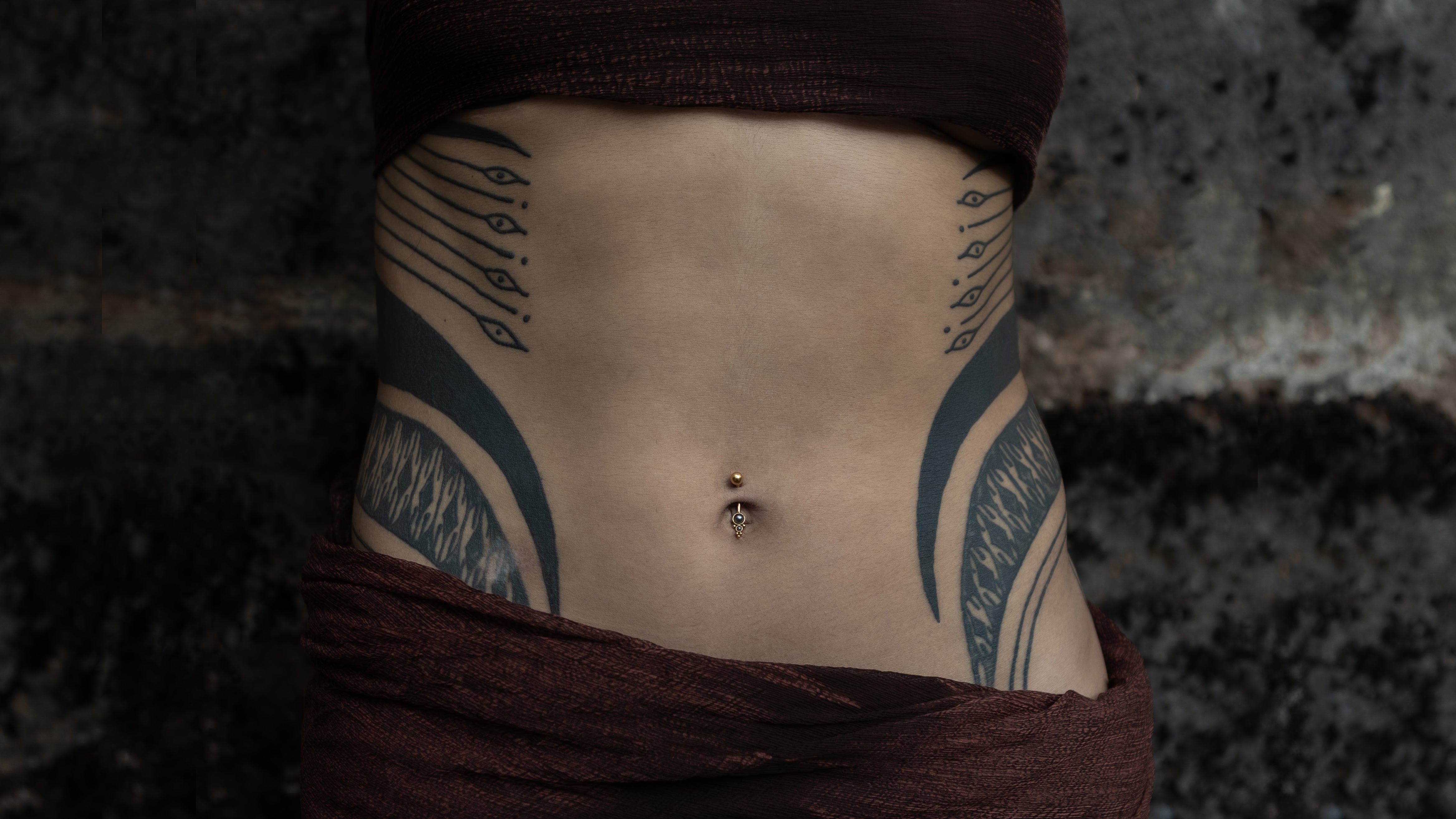
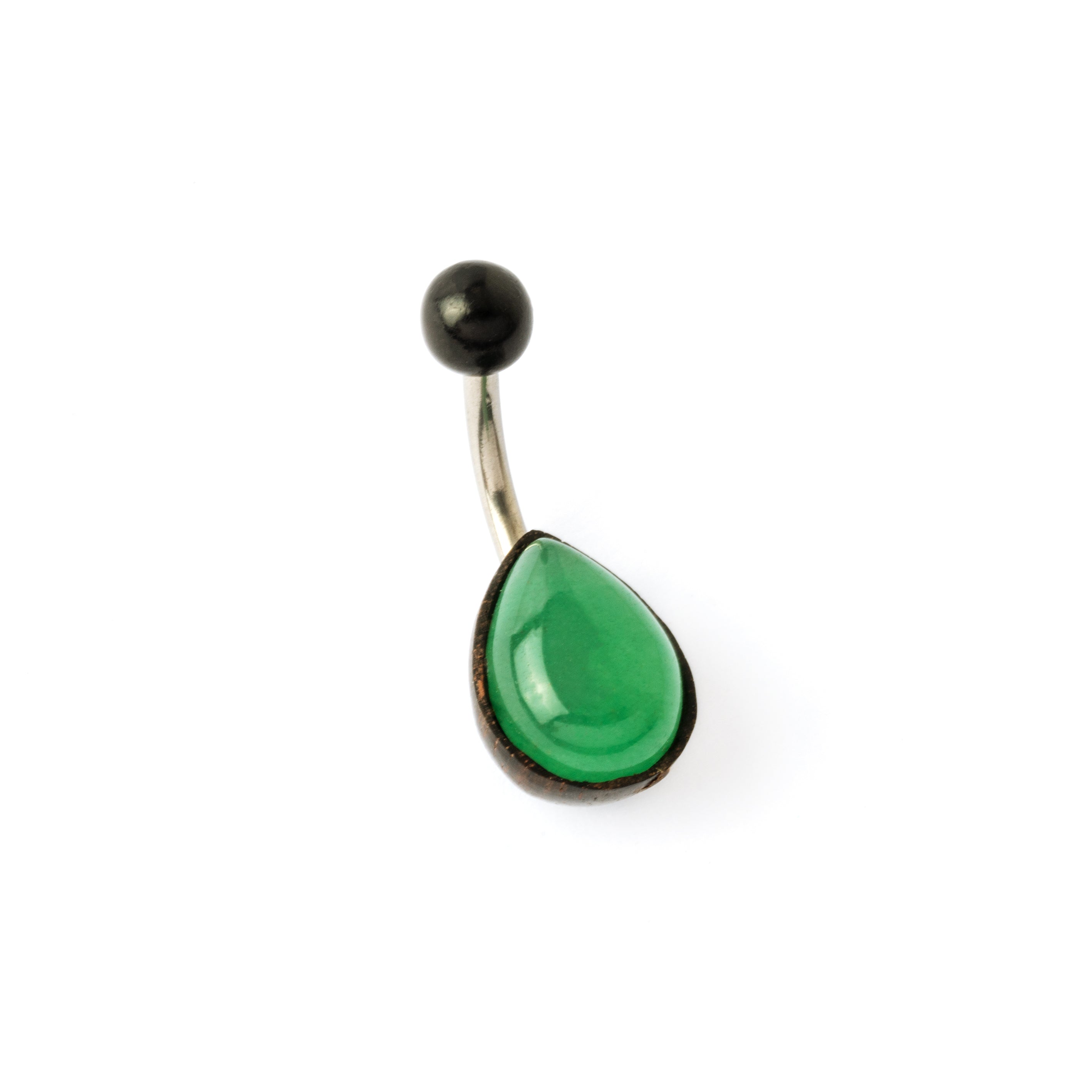
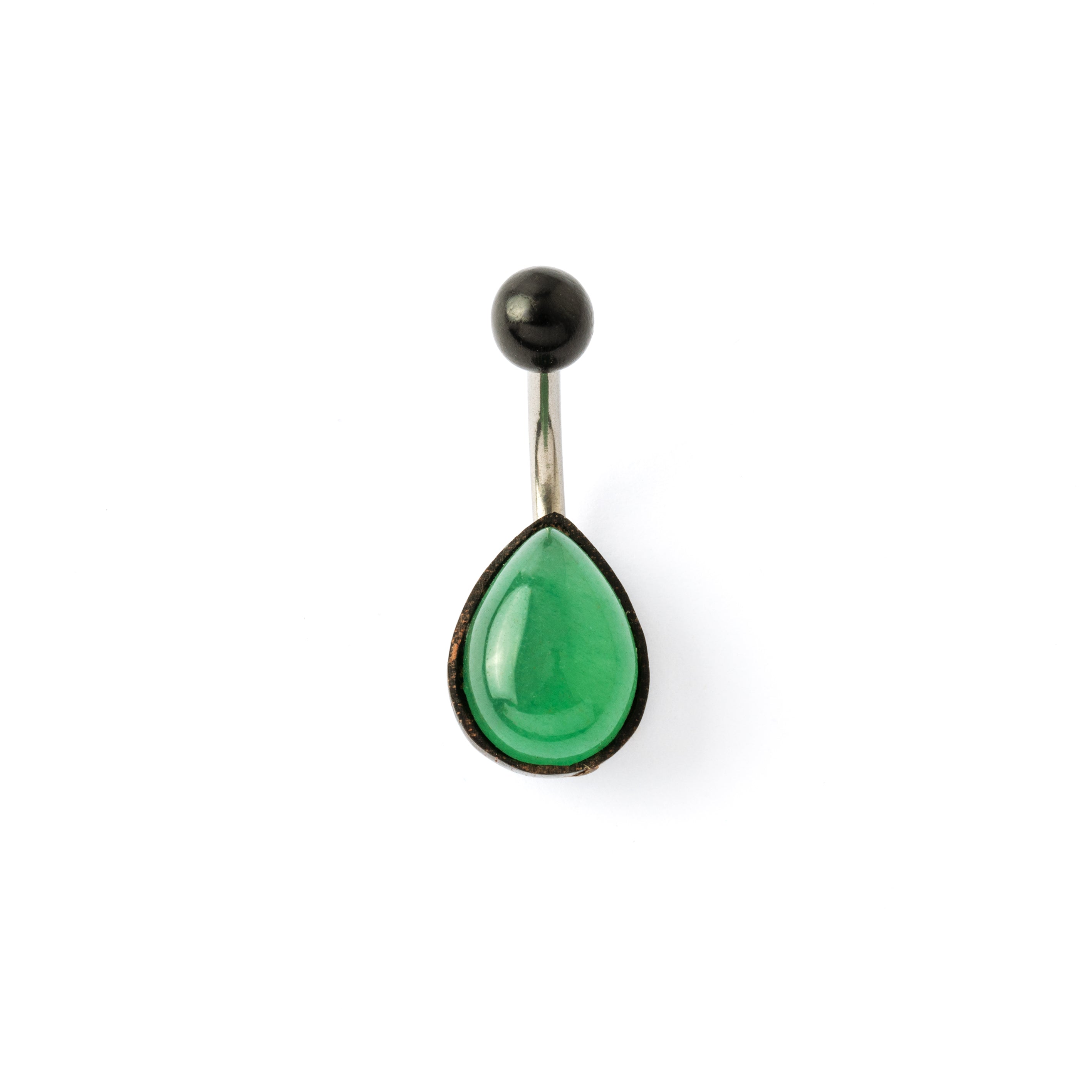
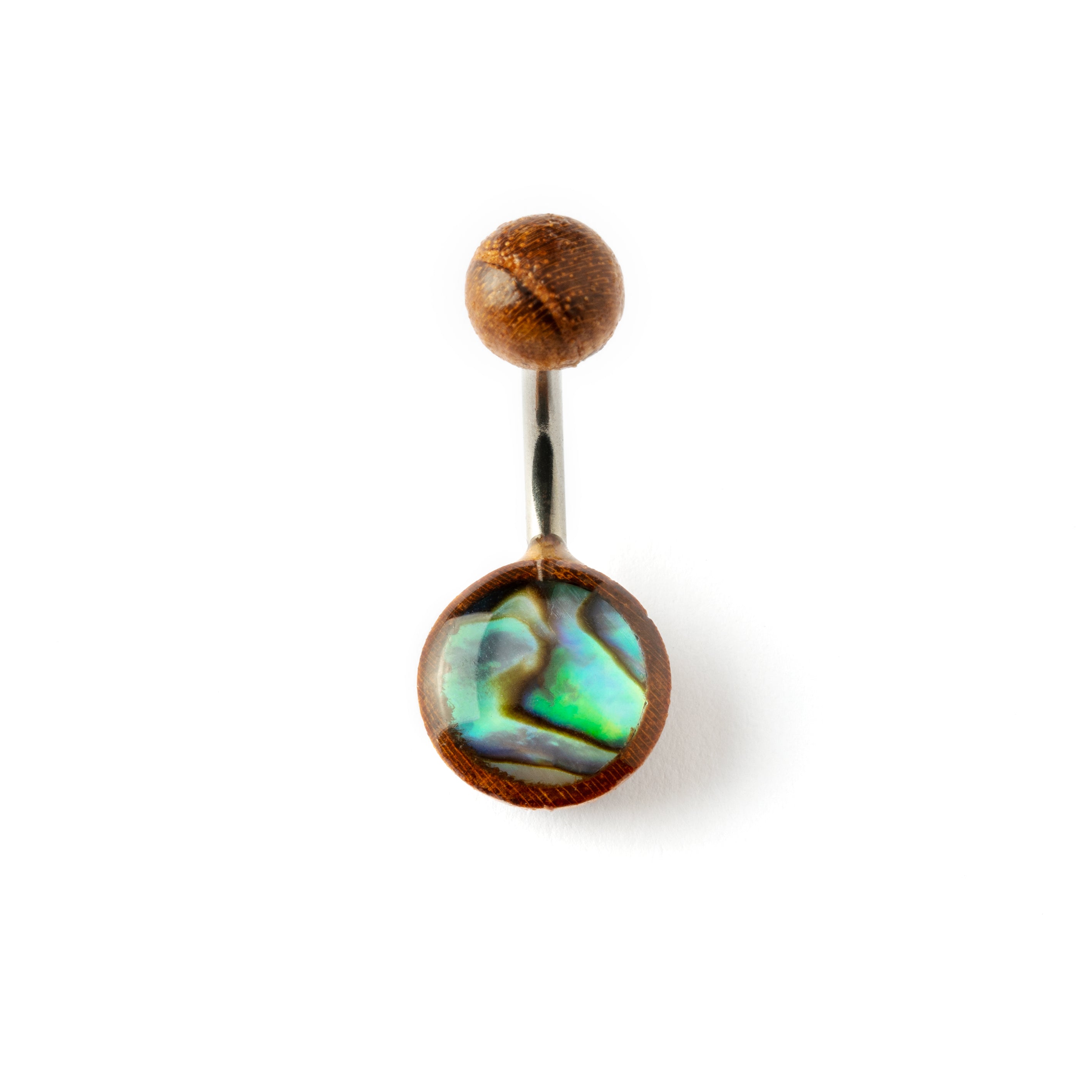
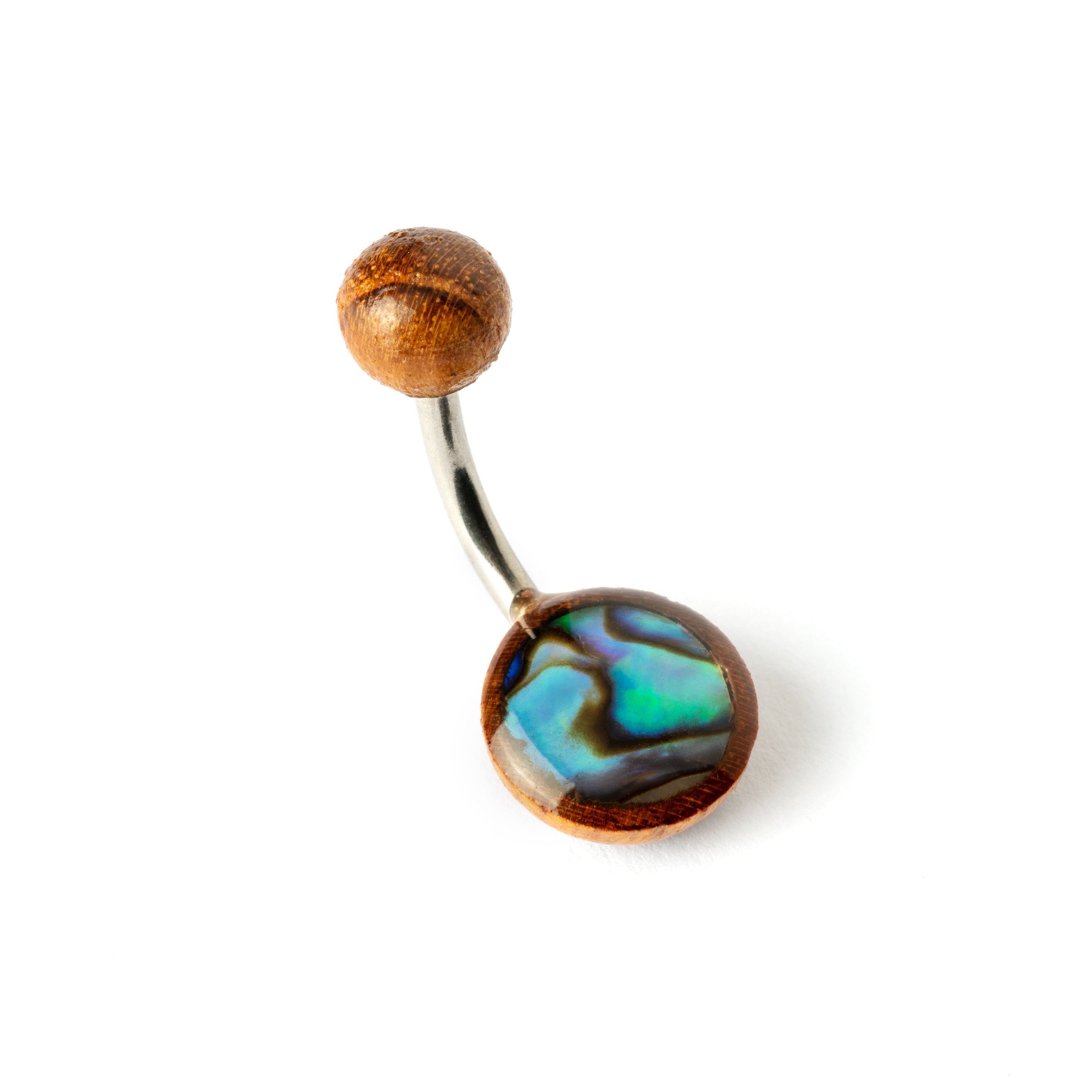
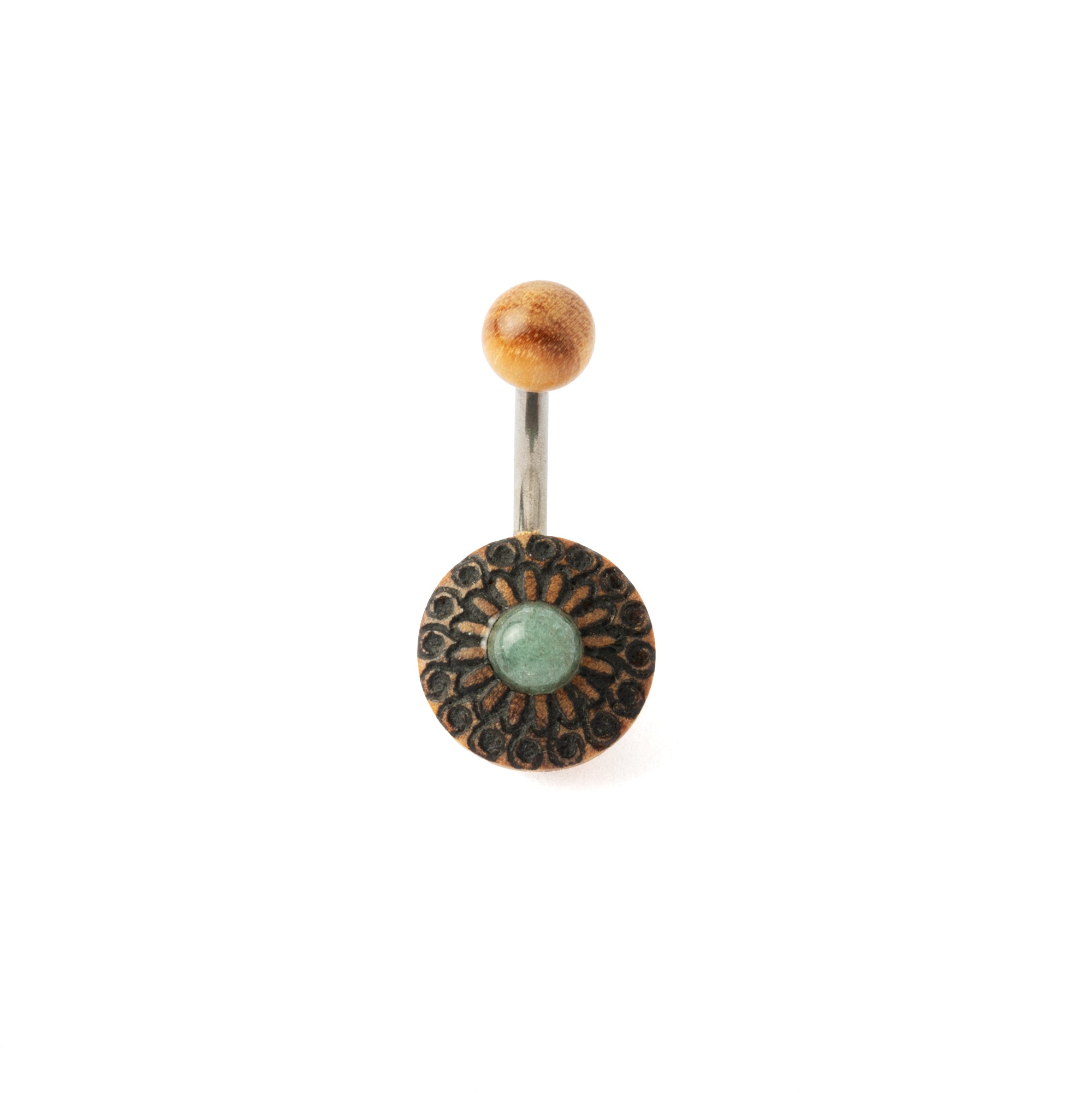
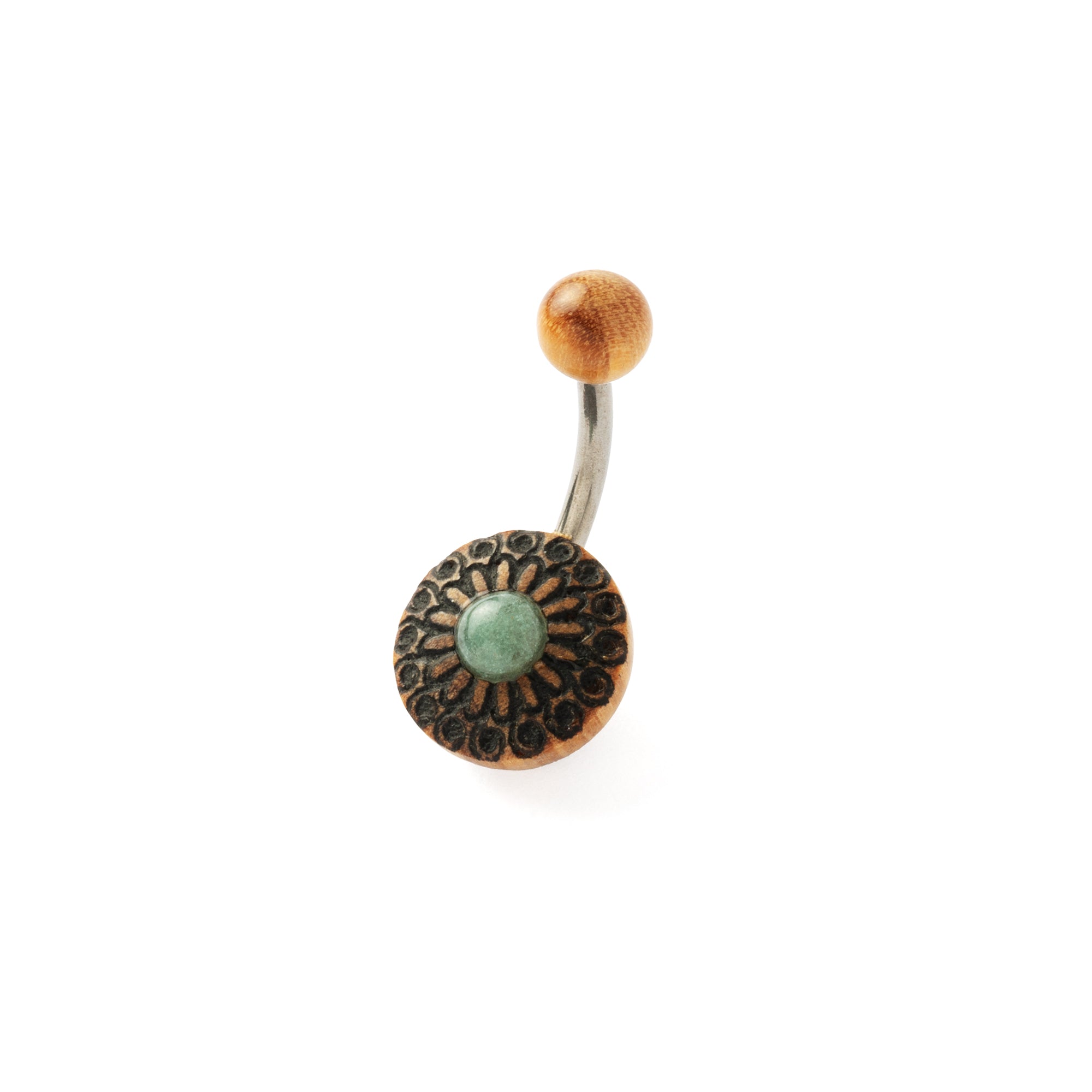
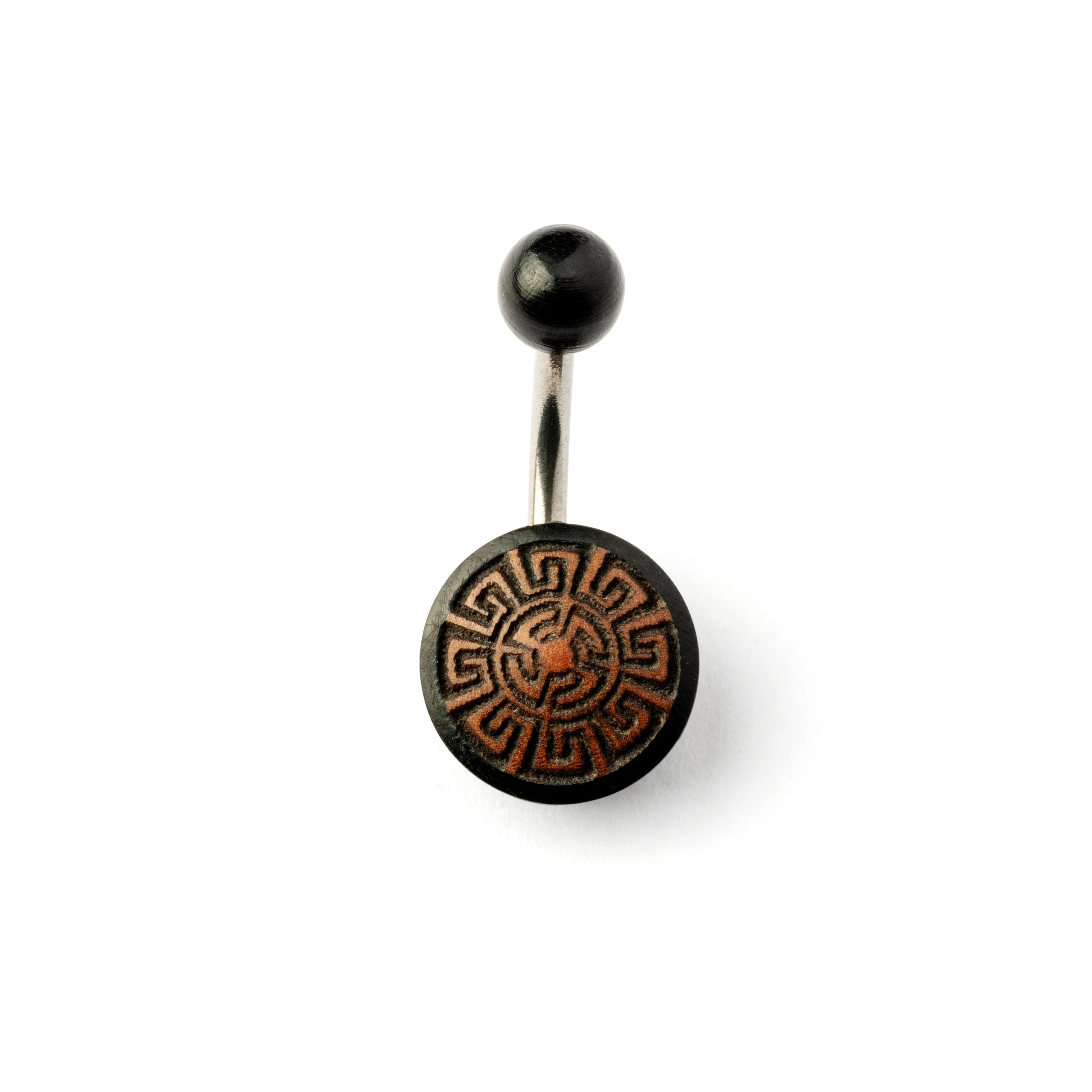
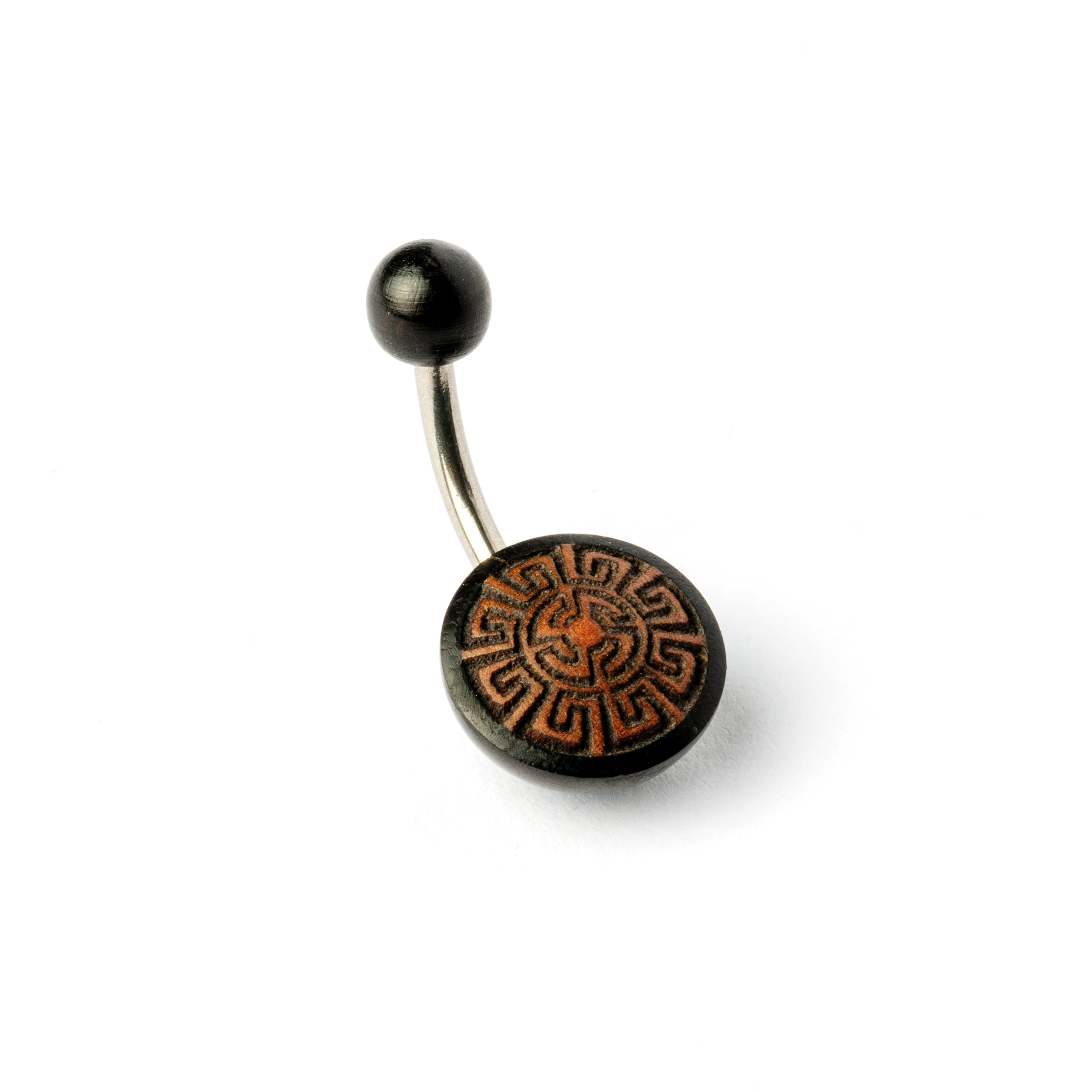
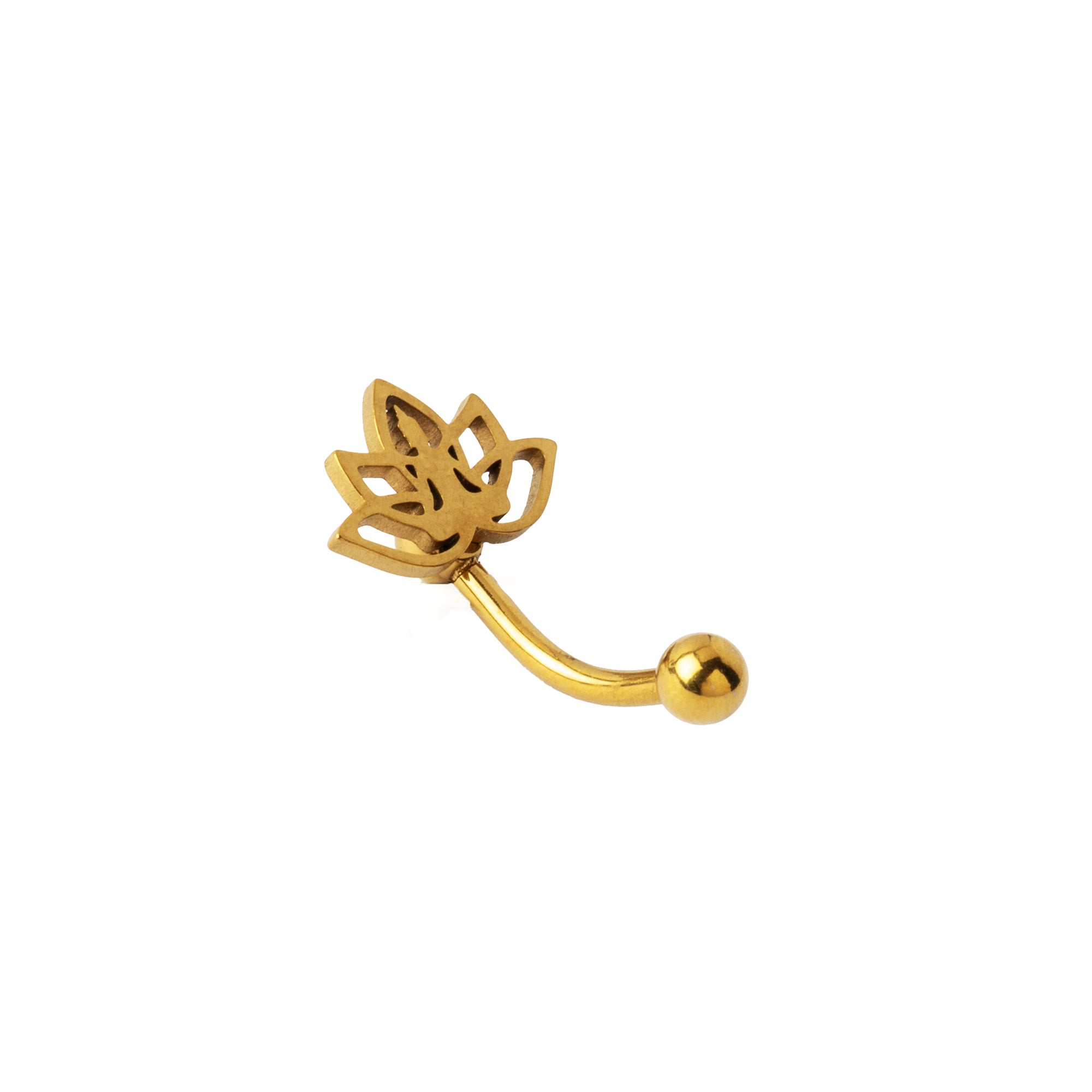
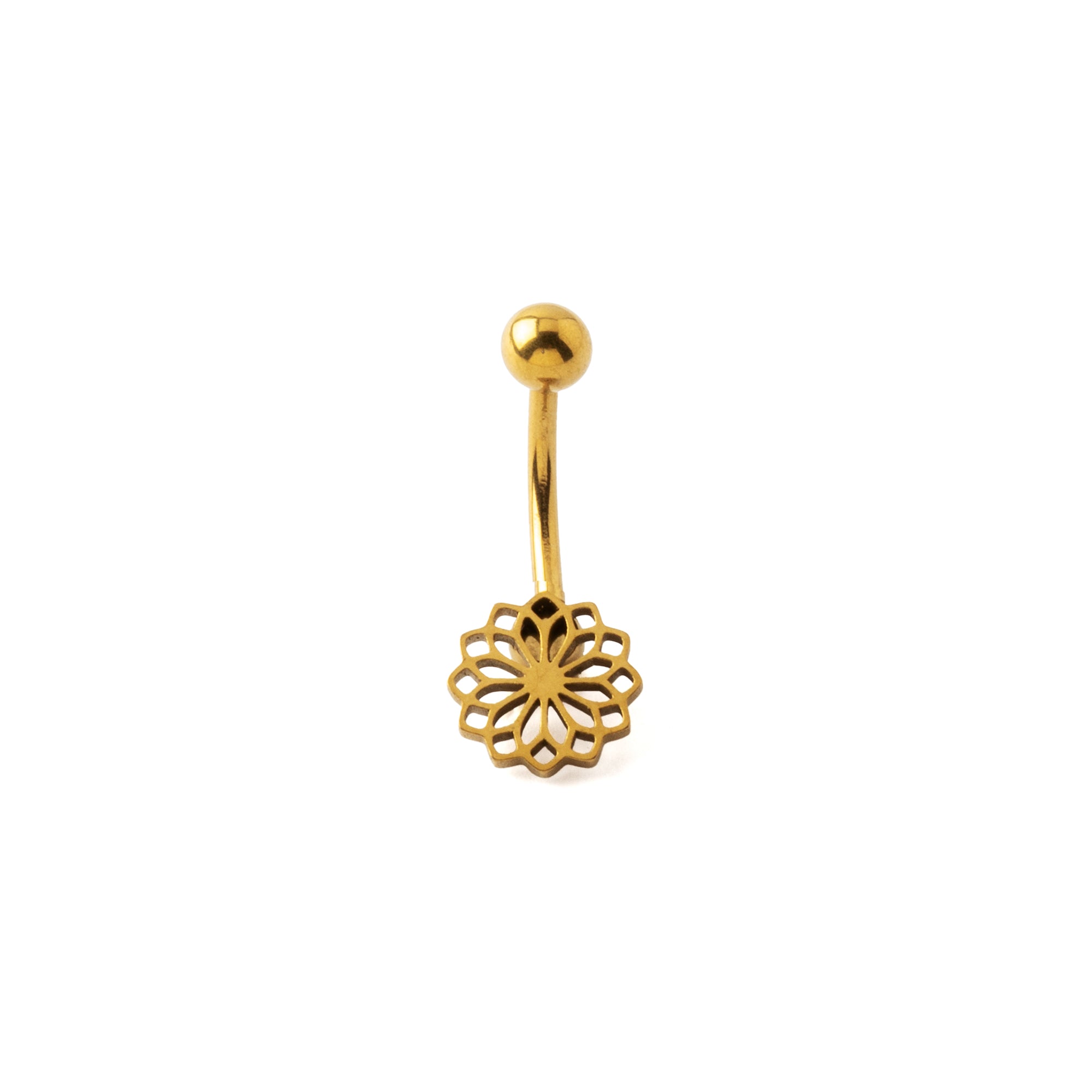
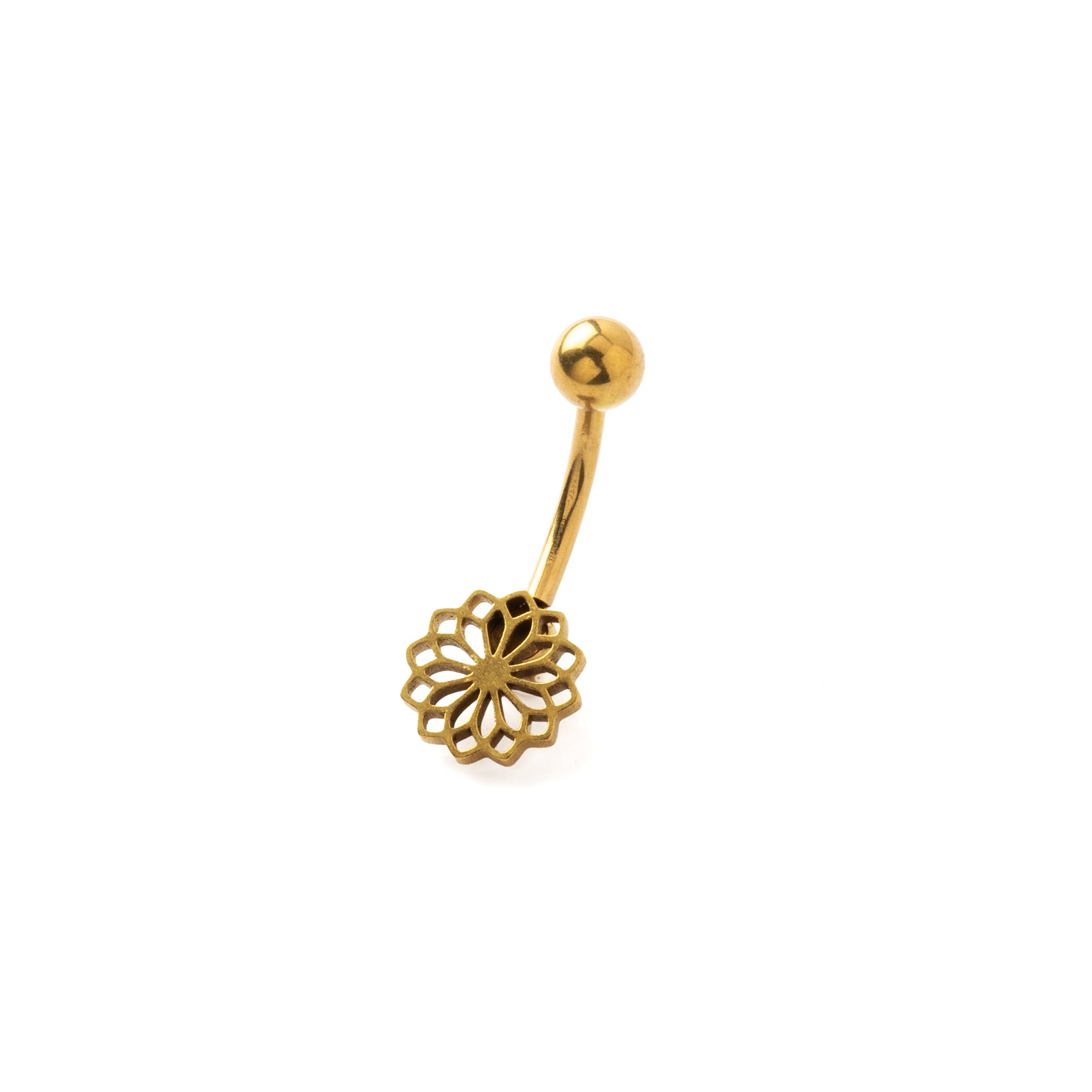
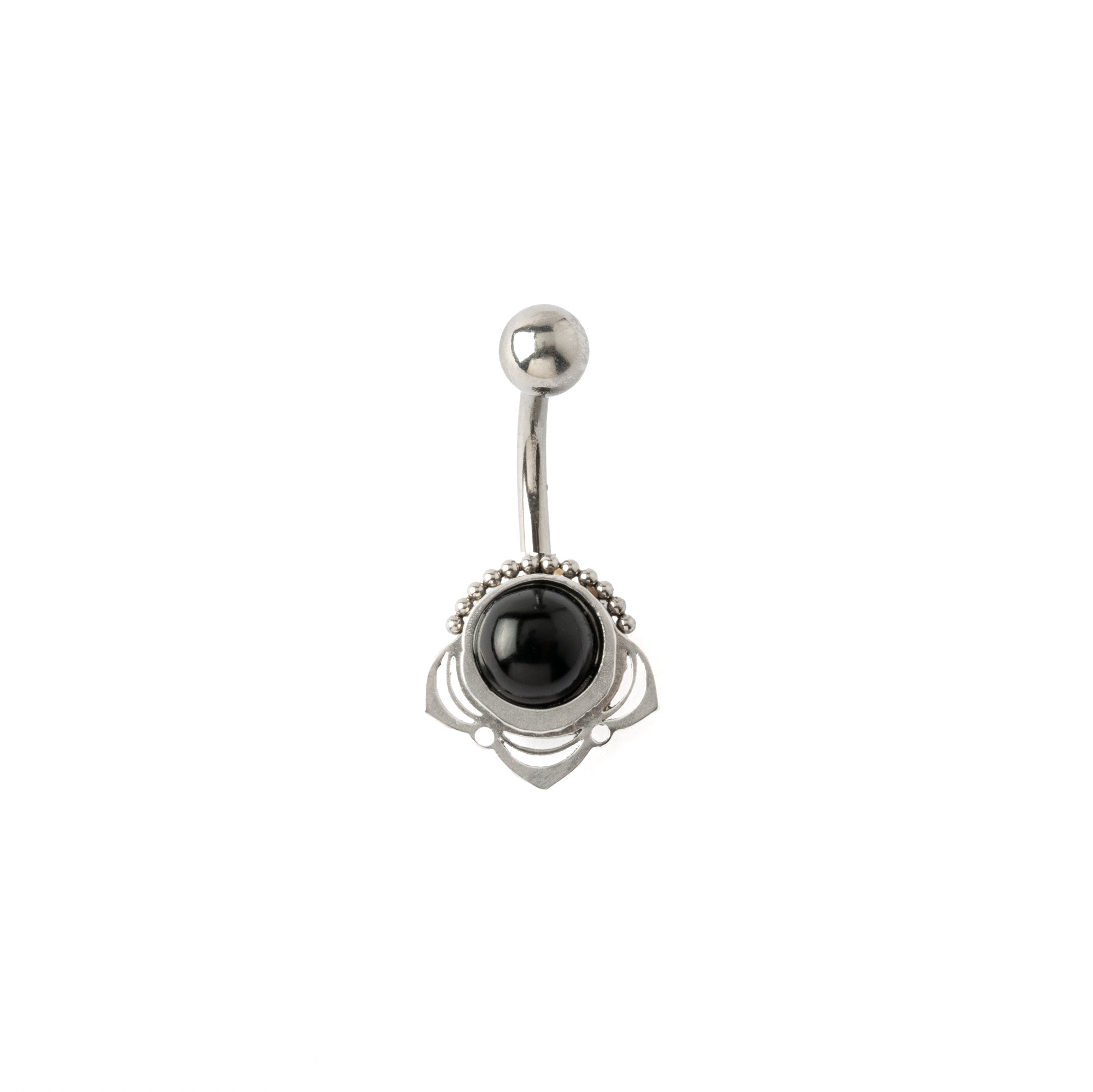
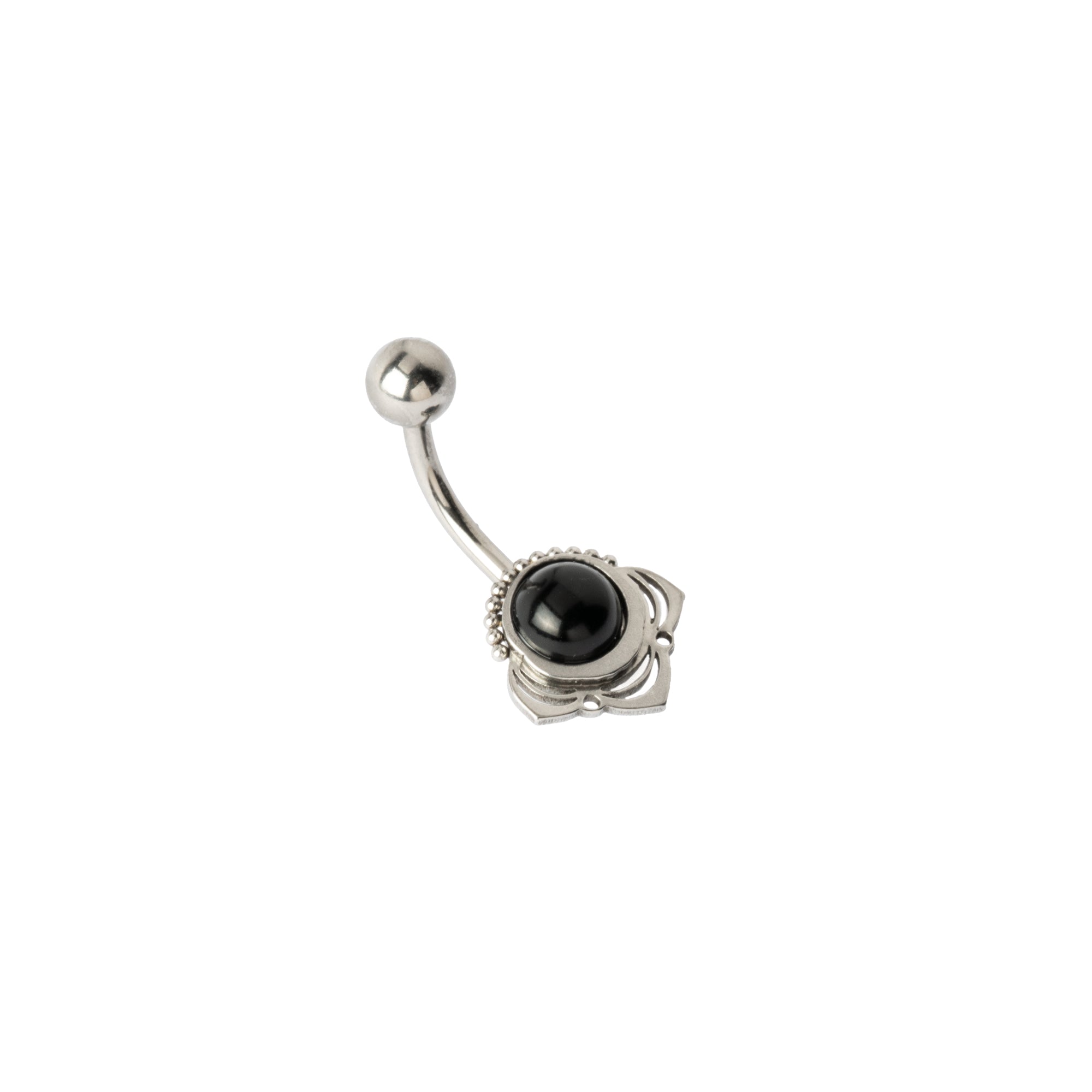
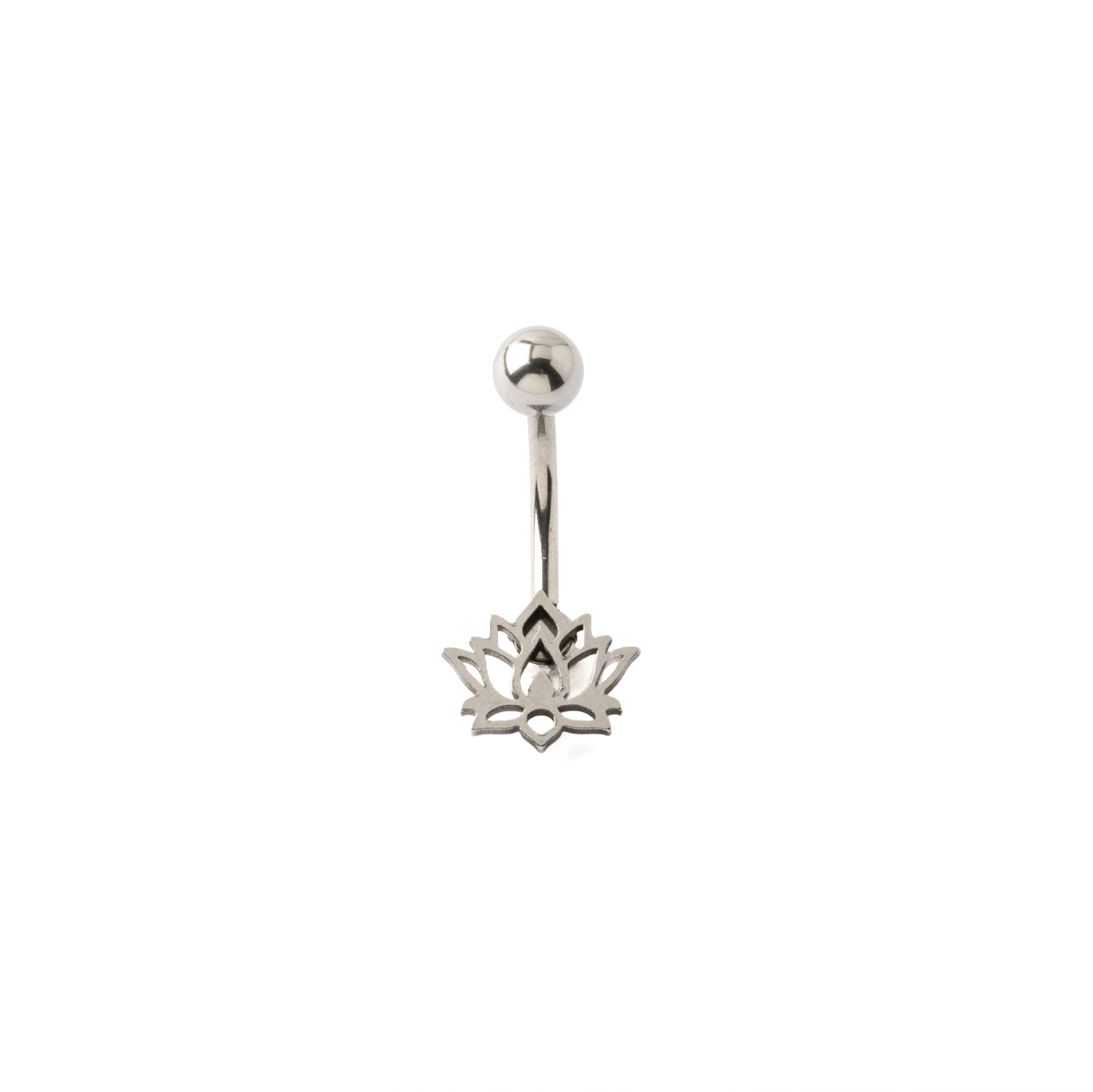
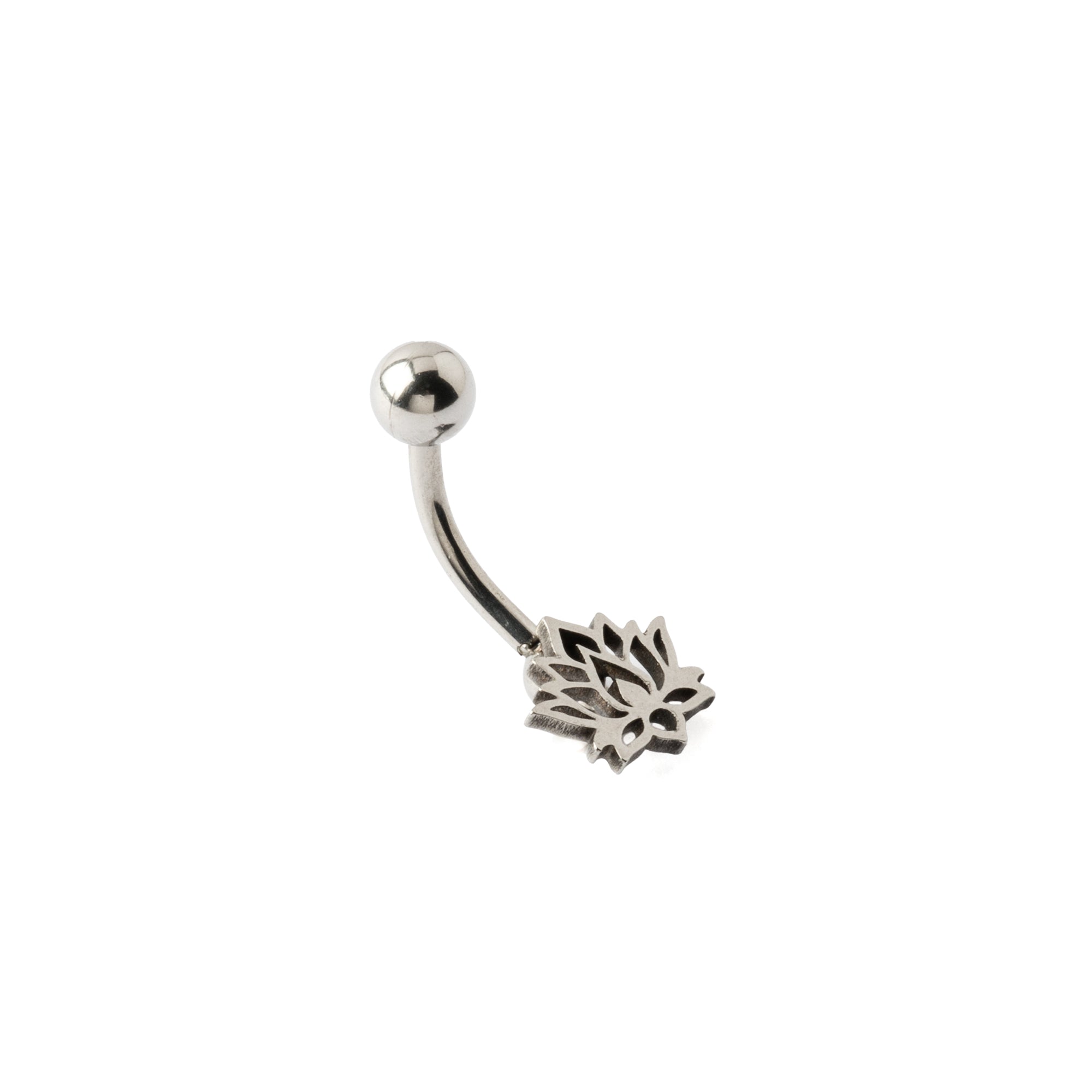
Nearly every piece in this collection is a curved barbell, the shape most people call a banana. A curved post with a ball threaded onto each end, worn with the smaller ball at the top and the decorative end sitting below the navel. It's the fitting a navel piercing is normally done with, and the one almost all replacement jewellery is built on.
Within that, the designs split three ways.
Plain and gem-set bars. A single stone or a small cluster at the bottom. The everyday option, and the one to reach for under fitted clothes.
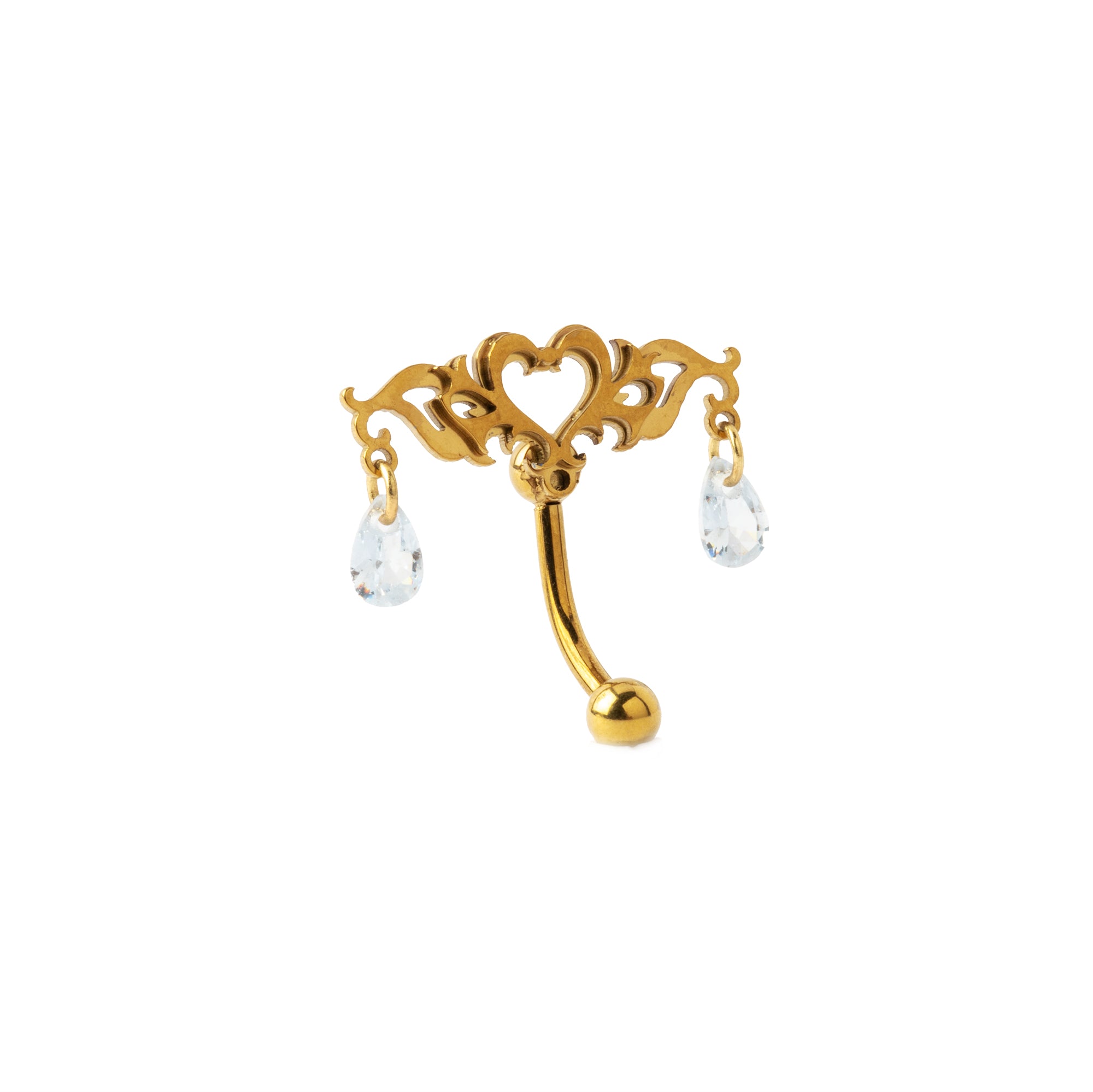
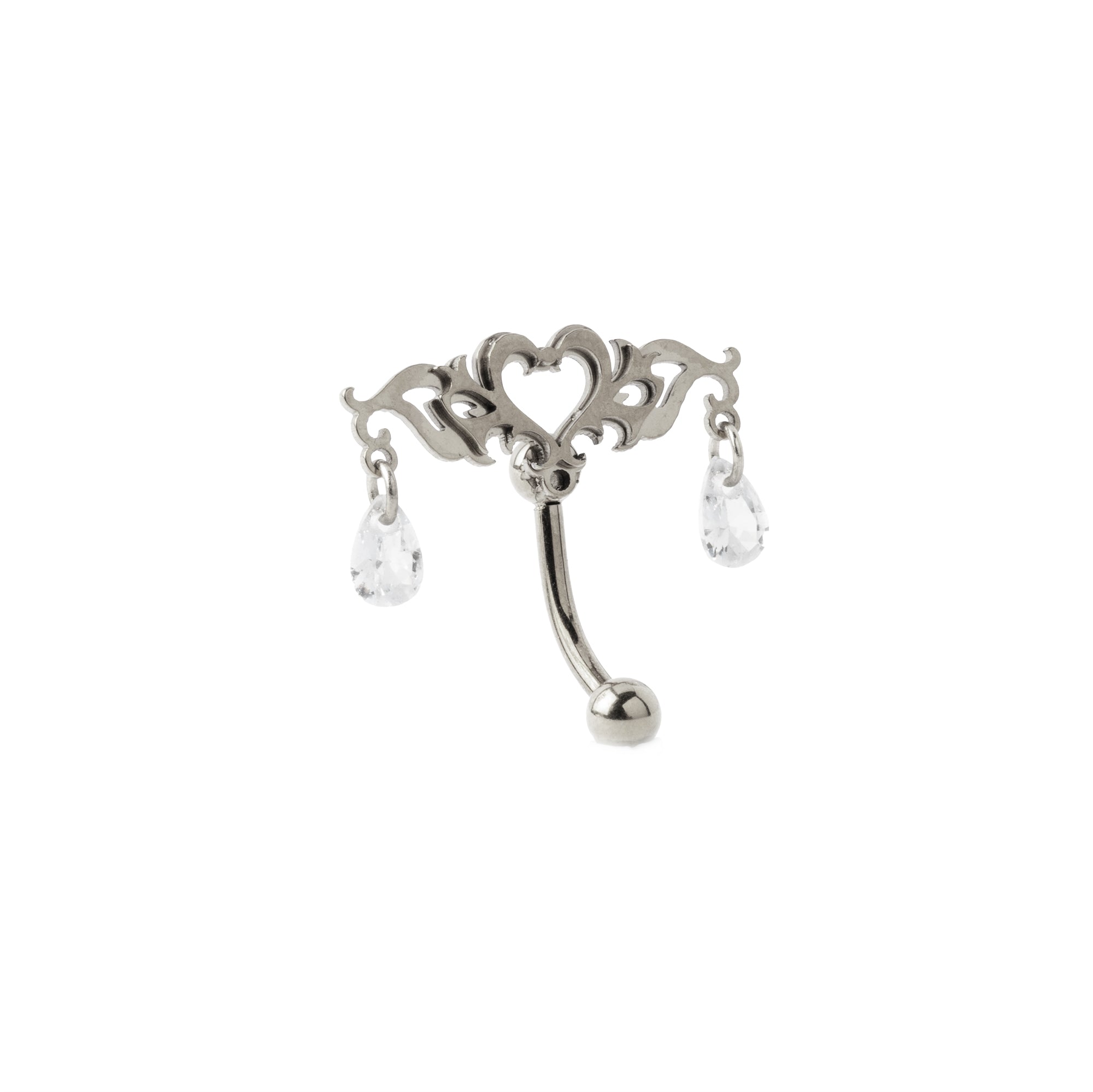
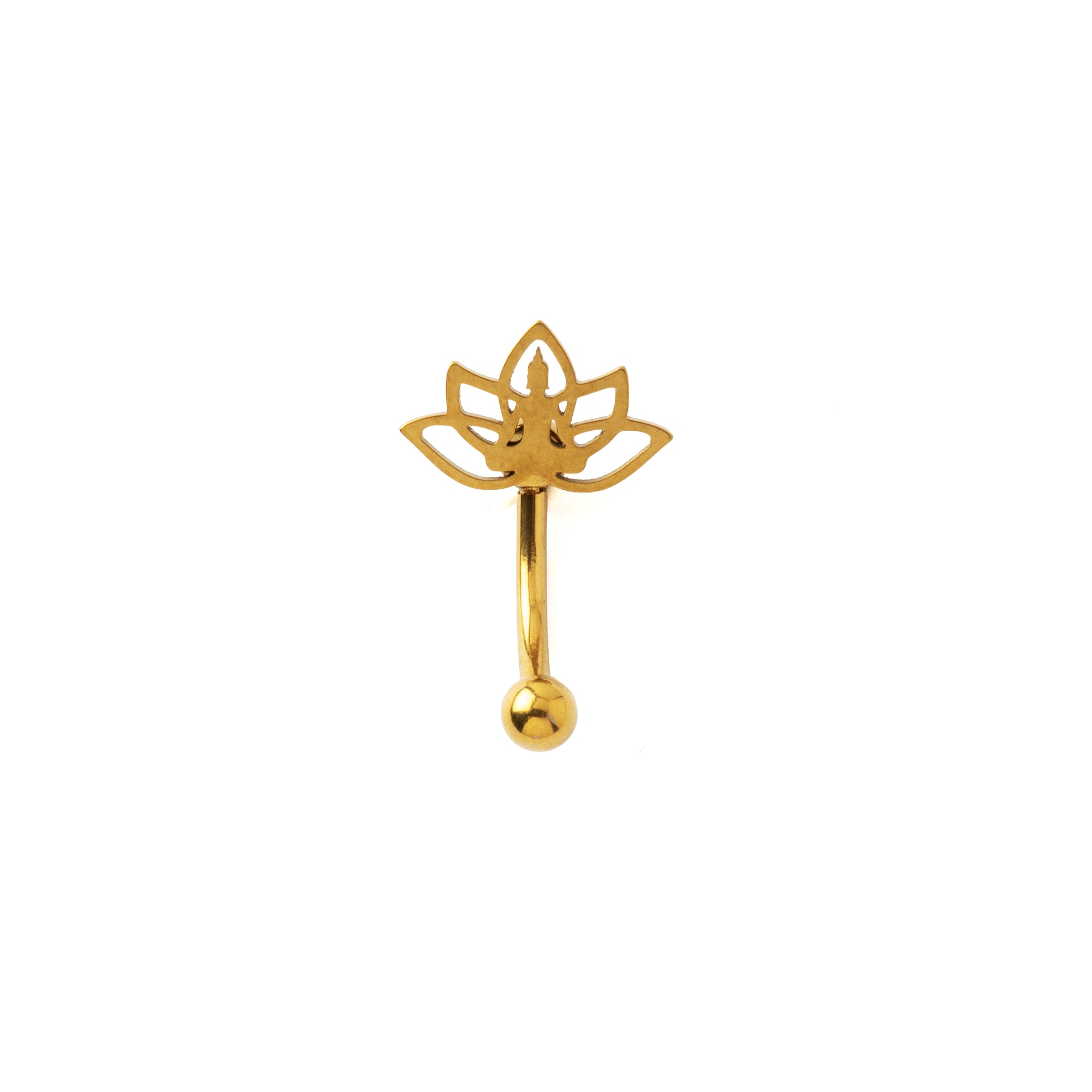
Drop and dangle designs. A charm hangs from the lower ball: lotus forms, crescents, feathers, teardrops. More movement, more visible, and the reason most people own more than one bar.
Reverse-set pieces. The detail sits at the top of the piercing rather than the bottom, so the design faces up towards the navel instead of hanging below it.
A small number of clicker-style rings sit in the collection too, for anyone whose piercing and anatomy suit a ring rather than a bar. Your piercer is the one to ask about that.
Getting the size right
Two measurements, and neither is a matter of taste.
Gauge is the thickness of the bar. Navel piercings are usually done at 1.6mm, which is 14g, the standard most UK piercers work to. A bar that's thinner will move around in the piercing; one that's thicker won't go through.
Bar length is the distance between the two balls, measured along the curve rather than end to end. 10mm is the common length, with 8mm, 12mm and 14mm all in regular use depending on how deep the piercing sits and how much tissue it passes through.
How to check yours. Take out the bar you currently wear, lay it flat and measure the curved section between the balls with a ruler. That's the length. For the gauge, the simplest route is to take the piece to a piercer, who will measure it in seconds. Our jewellery measuring guide walks through it, and the gauge-to-millimetre conversion chart converts between the two systems.
If you were pierced recently, the bar you were fitted with is usually longer than the one you'll settle into. Ask the piercer who did it before you downsize.
The materials
316L surgical steel, in plain, gold and rose gold finishes. The bulk of this collection, and the standard material for navel jewellery. Hard-wearing, easy to keep clean and the least troublesome thing to wear daily.
Silver. Used on a handful of designs where the detail calls for it. It darkens slowly with wear.
Bone and horn. Natural materials on a small number of pieces, warm against the skin and lighter than metal.
Stones and shell. Twenty-four across the range: turquoise, black onyx, black pearl, abalone, white and blue opal, amethyst, African jade, mother of pearl, tiger's eye, rose quartz, moonstone, lapis lazuli, malachite and more. Each is cut individually, so colour and marking shift from piece to piece.
Common questions
What size is a standard belly bar?
1.6mm (14g) thick with a 10mm bar length is the usual fitting for a navel piercing in the UK. 8mm, 12mm and 14mm lengths are all common too, depending on the piercing. Measure the bar you're wearing rather than guessing.
How do I measure my belly bar?
Remove the bar, lay it flat and measure the curved section between the two balls. That gives you the length. The thickness is harder to judge by eye, so take the piece to a piercer to have the gauge measured.
What's the difference between a belly bar and a belly ring?
A belly bar is a curved barbell that sits through the piercing with a ball at each end. A belly ring is a hoop or clicker that circles it. Bars suit most navel piercings; whether a ring will sit correctly depends on your anatomy, so ask your piercer.
When can I change my belly jewellery?
Navel piercings take their time, and healing varies from person to person. See the professional piercer who did yours before you change it for the first time.