What bronze is, and what it isn't
Bronze is an alloy of copper and tin, and one of the oldest worked metals there is. That matters less as history than as a practical fact: copper alloys behave differently from silver and very differently from plating.
Bronze is not brass. Brass is copper and zinc, and it sits yellower and brighter. Bronze is browner, warmer and a little heavier in the hand at the same size. Put the two side by side and the difference is obvious; in a photograph it often isn't, which is why it's worth saying plainly.
Bronze is not a plating. There is no thin layer to wear through. The colour goes all the way through the piece, so a scratch shows bronze underneath rather than a different metal, and a piece that dulls can be brought back rather than replaced.
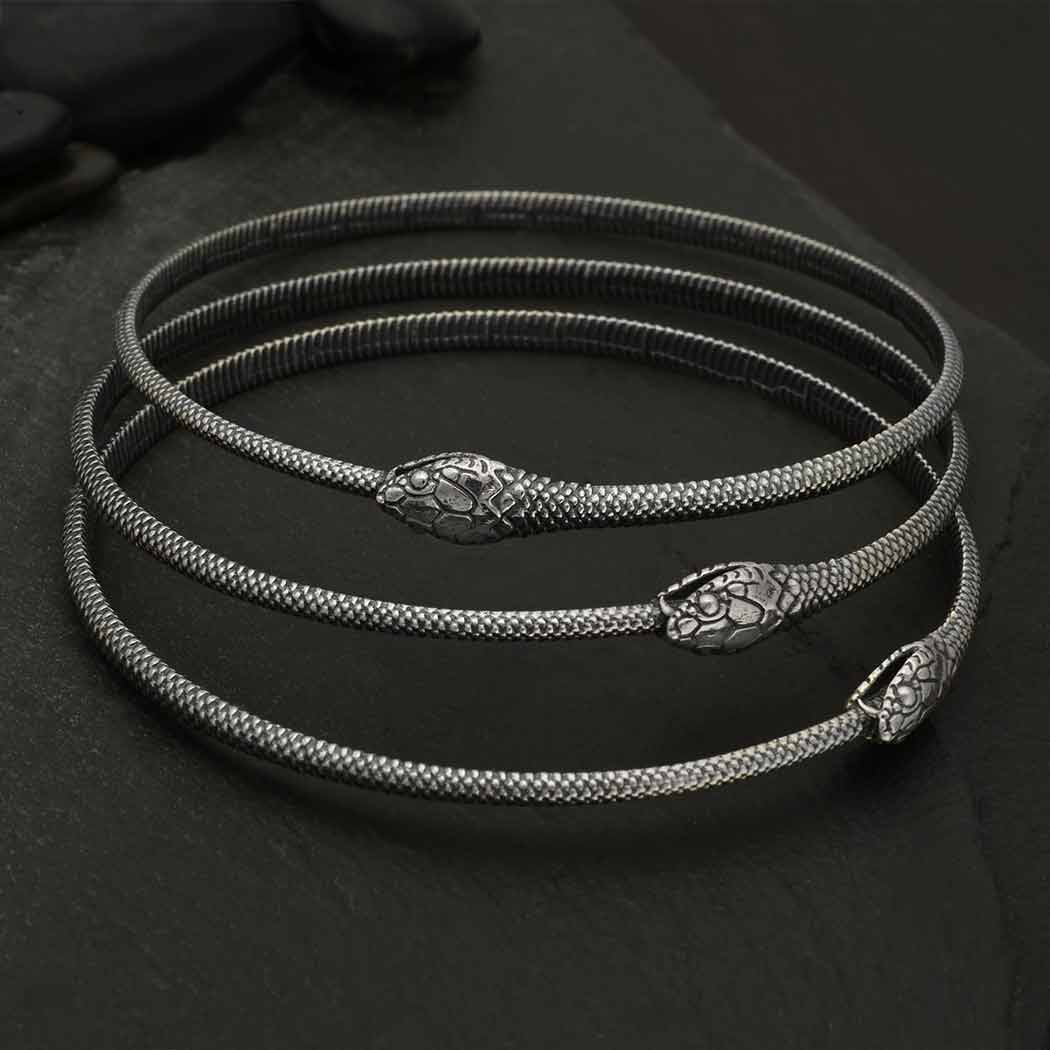
Our pieces are cast, not stamped. Casting is what lets a design hold undercuts, texture and depth, like the scales on a cuff or the recesses in a charm, where a pressed piece would flatten them out.
How bronze ages
It darkens, and it's meant to. A new bronze piece is bright and golden-brown. Over weeks of wear it deepens, and the recesses of a detailed design go darker than the raised surfaces. That contrast is what makes a cast piece read properly, and most people stop polishing once they see it.
If you want it bright again, a soft cloth and a gentle metal polish will take it back, and it will start darkening again from there. There's no wrong answer. Some people polish monthly, some never.
The green mark. Copper alloys can leave a temporary green tint on skin, depending on your own skin chemistry, the weather and anything you've put on your hands. It washes off with soap and water and doesn't affect the piece. If it bothers you, keep the piece dry, take rings off before handwashing, and consider the silver version of the same design.
Keep it out of water. Swimming pools, the sea and long showers accelerate everything. Perfume and hand cream do too, so dress first and put jewellery on last.
Full detail in our jewellery material guide.
Bronze or silver: most designs are both
Around eighty of the designs in this collection are made in bronze and in sterling silver, with the choice made on the product page rather than in a separate listing. A handful are offered in gold-plated silver as well, and where that's the case it's described as gold-plated silver, not as gold.
It's worth choosing deliberately rather than by price. Bronze is warmer, ages visibly and suits the heavier sculptural designs. Silver stays cooler in tone, darkens more slowly and sits better against pale stones and existing silver pieces. Same mould, different character.
Ring sizes run US 5 (UK J½) through to US 12 (UK X½), listed in both notations on every ring. If you don't know your size, our measuring guide explains how to measure a ring you already own, which is more reliable than measuring a finger.
Common questions
Does bronze jewellery turn your skin green?
It can. Copper alloys react with skin chemistry, and the result is a temporary green tint that washes off with soap and water. It varies a lot from person to person and day to day. Keeping the piece dry and putting it on after hand cream reduces it, and the sterling silver version of most designs here is an alternative if it persists.
Is bronze the same as brass?
No. Bronze is copper and tin; brass is copper and zinc. Bronze is browner and warmer, brass is yellower and brighter. Bronze also darkens more readily with wear.
How do I clean bronze jewellery?
A soft dry cloth for everyday care, and a gentle metal polish when you want the brightness back. Avoid soaking it, and take it off before swimming or showering.
Will the colour wear off?
No. The colour isn't a coating. Bronze is solid through, so it darkens and can be polished back rather than wearing through to another metal underneath.